


What if Women Designed the city?
Bioregioning in Practice 2.0
Bioregioning in Practice 2.0
Learn directly from pioneering practitioners from ten different bioregions around the world how to get started and regenerate your own place.
with THE BIOREGIONAL LEARNING ALLIANCE


Bioregioning in Practice
Bioregioning, the practice of working for resilience, regeneration and climate adaptation at the scale of geographically-defined regions, is gaining traction with a wider audience.
We are increasingly hearing economists, politicians, ecologists and thought leaders using the term in the context of responding to the polycrisis. The number of bioregional centres around the world is growing, all of which are activating their bioregions in ways unique to them and to their place.
In response, the 2026 edition of Bioregioning in Practice offers a series of themed learning sessions that take practitioners into a deepening of their understanding of how to both start and lead this work.
Each session will have a different theme that is defined by a particular aspect of bioregioning. In the first half of the 90-minute sessions, invited speakers from around the world will be hosted in a discussion of the theme, speaking from their own experience and practice. In the second half, the floor will be open for a group conversation.
One course. Four dimensions. Unlimited impact.
You are invited to join our 10-week online series that introduces the full spectrum of bioregional practice.
Learn directly from experienced leaders in the field how to work with whole systems and landscapes
Join an international learning community working at bioregional scale
Discover the many pathways and practices that together make up bioregioning
Explore how to work regeneratively, drawing on place-sourced and indigenous wisdom
Participate in interactive discussions and networking opportunities
Learn about upcoming opportunities to deepen your practice through residentials, learning labs and mentorship offered by members of the Bioregional Learning Alliance


Key Benefits
Gain a comprehensive understanding of sustainability.
Be part of a global network of changemakers.
Earn a certificate upon completion from a curriculum recognised by UNESCO.
Opportunity to upgrade your GEDS into a Masters/PhD degree with Ubiquity University.
-
List Itemfghfgh fghfdfv fdf
-
List Item
Skills Gained
Address complex challenges holistically.
Foster inclusion, equity, and social justice.
Economic perspectives and tools to align work, life, and finances.
Enhance projects and restore ecosystems.
Communicate effectively across diverse cultures and communities.
Sustainable project management and strategic planning.
Strategies that enhance resilience and flexibility.
Impact assessment using sustainability indicators.
Course Details
By participating in this course, you will:
Develop a deep understanding of the principles of bioregioning and their real-world applications
Learn how work with both ecologies and economies through nurturing a shared bioregional narrative and love of place
Explore governance models that empower communities in place-based stewardship
Understand how art, culture, and indigenous knowledge contribute to regenerative bioregions
Gain hands-on tools for engaging communities and facilitating bioregional projects
This course includes a live translation to Spanish during session with practitioners
Key course information
Course type:
Online
Date:
March 23, 2026
Duration:
10 weeks
Live sessions
Tuesday sessions with practitioners at 6 PM UK (translated to spanish);
Thursday peer dialogues sessions with facilitators at
6 PM UK
Price:
Options based on what's best for you: £300, £350 or £400.
There's a limited number of scholarships for participants from the Global South. Apply here by March 16th 2026
Workload:
Weekly 90 min. live session (recorded and avaiable afterwards) + 60 min. weekly group dialoguee
Facilitation:
Led by 10 experts and a diverse list of presenters
Interaction:
Optional discussion groups hosted by Gaia Education to deepen engagement
Certificate:
Provided upon successful completion
Course Facilitators
Our course is taught by leading bioregional practitioners from diverse global contexts, including:

Isabel Carlisle
Bioregional Learning Centre, UK
Isabel is the founder of the Bioregional Learning Centre in Devon, UK, and a leading advocate for place-based education and regenerative design. With a background in storytelling, systems thinking, and community engagement, she works to empower local actors to restore ecological and social resilience. Isabel’s work focuses on bioregioning as a practice of deep transformation, fostering connections between people, landscapes, and regenerative economies.
Isabel is the founder of the Bioregional Learning Centre in Devon, UK, and a leading advocate for place-based education and regenerative design. With a background in storytelling, systems thinking, and community engagement, she works to empower local actors to restore ecological and social resilience. Isabel’s work focuses on bioregioning as a practice of deep transformation, fostering connections between people, landscapes, and regenerative economies.
Jane Brady will co-facilitate with Isabel. Jane is a Bioregional Learning Centre co-founder and co-presenter, Jane Brady brings design into the heart of BLC’s practices and projects as a way to try things ou, give form to ideas, spark conversation, and inspire action. Her understanding of ecological complexity and large-scale restoration projects comes from living alongside the redwoods and rivers of Northern California whilst working with environmental NGO California Trout.

Erika Zarate & Oscar Gussinyer
Resilience.Earth, Catalonia, Spain
As co-founder of Resilience Earth, Erika works with communities and organizations to develop distributed decision-making tools, place-based economic models, and governance structures that evolve with both the land and the people. Her approach is based on a decolonial and intersectional perspective and the belief in the ability of human groups to co-create more resilient, adaptive, and regenerative systems.
Also as co-founder of Resilience Earth, Oscar works on the ecosystemic articulation of the social and solidarity economy, the development of adaptive governance systems, and the creation of social infrastructures that balance autonomy and interdependence. His expertise in bioregioning and territorial regeneration enables him to design governance and economic models that center the ecological, social, and cultural specificities of each rural context.
As co-founder of Resilience Earth, Erika works with communities and organizations to develop distributed decision-making tools, place-based economic models, and governance structures that evolve with both the land and the people. Her approach is based on a decolonial and intersectional perspective and the belief in the ability of human groups to co-create more resilient, adaptive, and regenerative systems.
Also as co-founder of Resilience Earth, Oscar works on the ecosystemic articulation of the social and solidarity economy, the development of adaptive governance systems, and the creation of social infrastructures that balance autonomy and interdependence. His expertise in bioregioning and territorial regeneration enables him to design governance and economic models that center the ecological, social, and cultural specificities of each rural context.

Melina Angel
Colombia Regenerativa, Colombia
Melina is the founder of Colombia Regenerativa and a leader in bioregional identity-building, biomimicry, and systemic design. She specializes in creating bio-inspired, culturally rooted frameworks that help communities recognize their ecological interconnections and collaborate effectively. Her work integrates indigenous knowledge, regenerative economics, and ecological design to support resilient and thriving bioregions. Melina has been instrumental in shaping bioregional initiatives across Latin America, emphasizing local innovation and community-led change.
Melina is the founder of Colombia Regenerativa and a leader in bioregional identity-building, biomimicry, and systemic design. She specializes in creating bio-inspired, culturally rooted frameworks that help communities recognize their ecological interconnections and collaborate effectively. Her work integrates indigenous knowledge, regenerative economics, and ecological design to support resilient and thriving bioregions. Melina has been instrumental in shaping bioregional initiatives across Latin America, emphasizing local innovation and community-led change.

Joel Glanzberg
Pattern Mind, USA
Joel is the founder of Pattern Mind, a renowned permaculture designer, educator, and ecological thinker with decades of experience in regenerative design. His work focuses on tracking and understanding the living patterns of landscapes, helping individuals and communities reconnect with natural systems, deep observation, and ecological consciousness. By integrating permaculture, living systems thinking, and indigenous tracking techniques, he supports the creation of resilient and regenerative human settlements.
Joel is the founder of Pattern Mind, a renowned permaculture designer, educator, and ecological thinker with decades of experience in regenerative design. His work focuses on tracking and understanding the living patterns of landscapes, helping individuals and communities reconnect with natural systems, deep observation, and ecological consciousness. By integrating permaculture, living systems thinking, and indigenous tracking techniques, he supports the creation of resilient and regenerative human settlements.

John Thackara
Doors of Perception, France
John is an internationally recognized author, speaker, and curator exploring the intersection of design, sustainability, and bioregional economies. As the founder of Doors of Perception, he has worked with communities, policymakers, and organizations to develop regenerative economies, livelihoods, and place-based solutions. His research and writing emphasize how bioregions can become the foundation for sustainable living, focusing on food, water, and social well-being.
John is an internationally recognized author, speaker, and curator exploring the intersection of design, sustainability, and bioregional economies. As the founder of Doors of Perception, he has worked with communities, policymakers, and organizations to develop regenerative economies, livelihoods, and place-based solutions. His research and writing emphasize how bioregions can become the foundation for sustainable living, focusing on food, water, and social well-being.
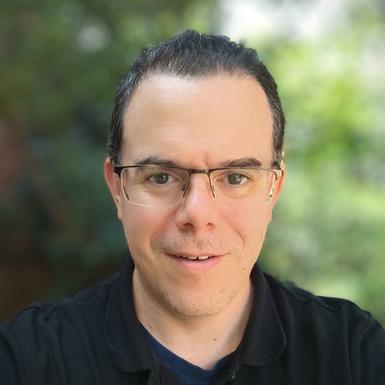
Nick Paling
Bioregional Learning Centre
Nick is an environmental scientist and systems practitioner specialising in collaborative governance, knowledge brokerage and nature-based solutions. After beginning his career in molecular biology, he moved into wildlife conservation and landscape-scale ecology, working across academia, government, NGOs and utilities for more than 20 years. Now, as a bioregional and regenerative practitioner and co-lead of the Bioregional Learning Centre, he focuses on using data, evidence and governance to support climate adaptation and bioregional resilience. Nick is committed to mentoring others and enabling communities and ecosystems to thrive together.
Stuart is a leading systems change strategist, regenerative finance expert, and ecological designer. Co-author of Ecological Design, he has worked extensively on developing bioregional infrastructure, governance, and finance models to support resilience and regeneration. His expertise lies in integrating mapping, visualization, and systemic transformation tools to enable communities to govern their own regenerative pathways. Stuart has advised municipalities, businesses, and NGOs on designing place-based, self-sustaining economic systems that support ecological and social well-being.

Udi Mandel
Enlivened Cooperative, Hawaii, USA
Udi is a researcher, educator, and filmmaker specializing in cosmopolitical learning and the relationship between humans and the more-than-human world. Co-founder of Enlivened Cooperative and Ecoversities Alliance, his work explores how learning with key species and ecosystems can foster biocultural resilience and planetary health. Through deep engagement with indigenous wisdom, artistic practices, and ecological sciences, he helps communities reimagine their place within the web of life. Udi’s projects integrate storytelling, land-based education, and transdisciplinary collaboration to support regenerative futures.
Udi is a researcher, educator, and filmmaker specializing in cosmopolitical learning and the relationship between humans and the more-than-human world. Co-founder of Enlivened Cooperative and Ecoversities Alliance, his work explores how learning with key species and ecosystems can foster biocultural resilience and planetary health. Through deep engagement with indigenous wisdom, artistic practices, and ecological sciences, he helps communities reimagine their place within the web of life. Udi’s projects integrate storytelling, land-based education, and transdisciplinary collaboration to support regenerative futures.
Kelly Teamey has been active in the fields of international/sustainable development and education for the past 25 years as an activist, academic and facilitator. She has long been passionate about co-designing participatory and transformative pedagogies and research methodologies, especially those that engage directly with local ecologies and communities. She co-founded with others the Enlivened Cooperative and the Ecoversities Alliance that works to collaborate and co-learn for hopeful and ecological futures.
Kū Kahakalau is an award-winning native Hawaiian educator, researcher, cultural practitioner, grassroots activist, songwriter and expert in Hawaiian language and culture. Over the past 40 years Kū has been involved in Indigenous, particularly Hawaiian, Education and Research, advancing the Hawaiian-focused education movement through the establishment of diverse, highly successful culture-based programs and schools, promoting hands-on learning in the environment, community sustainability and Hawaiian self-determination.


Daniel Wahl
Mallorca, Balearic Islands Spain
Daniel is an internationally recognized author, educator, and regenerative design consultant, best known for his book Designing Regenerative Cultures. Through his long-standing collaboration with Gaia Education Daniel helped to introduce bioregional whole system design thinking and community design practice to activists and community organisers around the world. Daniel was awarded the 2021 RSA Bicentenary Medal for applying design in service to society and received a two year Volans-Fellowship in 2022. Since 2010 his bioregioning work on Mallorca lead to collaborations with Save the Med, Fundació Iniciatvias Mediterrani, Permacultura Mediterranea, and the Mediterranean Wildlife Foundation and many others.
Daniel is an internationally recognized author, educator, and regenerative design consultant, best known for his book Designing Regenerative Cultures. Through his long-standing collaboration with Gaia Education Daniel helped to introduce bioregional whole system design thinking and community design practice to activists and community organisers around the world. Daniel was awarded the 2021 RSA Bicentenary Medal for applying design in service to society and received a two year Volans-Fellowship in 2022. Since 2010 his bioregioning work on Mallorca lead to collaborations with Save the Med, Fundació Iniciatvias Mediterrani, Permacultura Mediterranea, and the Mediterranean Wildlife Foundation and many others.
Joe Holles de Peyer is a philosophy graduate, entrepreneur, and activist who sits on the board of several think-tanks and companies working in the fields of sustainability, technology, and ethics. He is a critical-thinker with a holistic approach to business and activism that gives depth to his work in driving meaningful, sustainable change.
Originally from Australia, Brad Robertson brings over 33 years of SCUBA diving experience, both recreational and professional. His diving journeys inspired him to establish Asociación Ondine in 2011 and the Save the Med Foundation in 2018, where he now serves as President. Brad is dedicated to fostering a responsible relationship with the sea and championing marine regeneration for future generations.

Eileen Hutton
Burren College of Art, Ireland
Eileen is an artist, researcher, and educator at Burren College of Art, specializing in ecologically engaged artistic practice. Her work fosters deep relationality with landscapes and communities, using art as a tool to explore bioregional identity and ecological resilience. Through collaborative and site-responsive methodologies, she helps people reconnect with their local environments in meaningful ways. Eileen’s projects bridge the arts, ecology, and participatory learning, contributing to creative approaches to regenerative place-making.
Eileen is an artist, researcher, and educator at Burren College of Art, specializing in ecologically engaged artistic practice. Her work fosters deep relationality with landscapes and communities, using art as a tool to explore bioregional identity and ecological resilience. Through collaborative and site-responsive methodologies, she helps people reconnect with their local environments in meaningful ways. Eileen’s projects bridge the arts, ecology, and participatory learning, contributing to creative approaches to regenerative place-making.
Dr. Brendan Dunford has worked on inputting, guiding and advising Farming For Nature on a voluntary basis since its inception. He is heavily involved in all aspects of the organisation. From a farming background in Co. Waterford, Brendan has spent the past 25 years living and working in the Burren region where he led the award-winning BurrenLIFE Project and its successor, the pioneering ‘Burren Programme’ between 2010-2022. Brendan is founding member the Burrenbeo Trust, a landscape-based charity which delivers an extensive range of place-based learning and community stewardship initiatives nationally. He is an Ashoka Fellow for Ireland and was awarded an honorary doctorate by NUI Galway in 2018 for his work in championing farmland biodiversity. He is a regular contributor to the Irish Farmers Journal covering ‘sustainability’ themes.
Maeve Stone (she/her) is a director and writer for film and theatre. Her work responds to issues of climate breakdown, and revisits the canon with a feminist lens. Searching for endangered local knowledge to support a reframing of our understanding of systems, biodiversity and social justice, her work seeks out hopeful futures.
Katerina Gribkoff is a visual artist based in western Ireland. In 2017, she received a BFA in Drawing from the Pratt Institute in Brooklyn, New York. Her work includes foraging and growing to make dyes and inks, biodegradable soft sculptures, photography, and plant support systems. Her research moves through contemporary eco-critical themes, systems thinking (permaculture) and new materialist studies.

Eduard Muller
Costa Rica Regenerativa & UCI, Costa Rica
Founder of the University for International Cooperation (Costa Rica), Eduard Müller is a globally recognized leader in regenerative development and planetary health. As a member of the UN’s International Panel on Climate Change (IPCC) and an advisor to multiple international organizations, he champions holistic, nature-based solutions to address the world’s most pressing ecological challenges. Through his work at Costa Rica Regenerativa, Eduard has been instrumental in developing innovative bioregional strategies that seamlessly integrate indigenous wisdom, scientific research, and participatory governance, fostering resilient communities and thriving ecosystems.
Founder of the University for International Cooperation (Costa Rica), Eduard Müller is a globally recognized leader in regenerative development and planetary health. As a member of the UN’s International Panel on Climate Change (IPCC) and an advisor to multiple international organizations, he champions holistic, nature-based solutions to address the world’s most pressing ecological challenges. Through his work at Costa Rica Regenerativa, Eduard has been instrumental in developing innovative bioregional strategies that seamlessly integrate indigenous wisdom, scientific research, and participatory governance, fostering resilient communities and thriving ecosystems.
Sessions Schedule and Subjects
The Social Dimension is one part of Gaia's unique 4D Model, which integrates social, ecological, economic and worldview dimensions to create lasting change.

Tuesday - March 24th, 2026
Where does Bioregioning come from? What does it offer us and how does it meet the challenges of now?
Hosts: Daniel Christian Wahl
Bioregioning is both a philosophy and a practice. While there is no orthodoxy about how to animate your bioregion, there are shared principles and ethics.
How to start a learning centre, or to work with an existing centre to expand their remit, and animate your bioregion. What does learning mean in this context? Where is learning happening in the world of bioregioning and what are the different approaches? What might you need to know in practical terms (as opposed to skills and competencies that will be dealt with in the next session).
The programme opens with a reflection on the intersection between three megatrends informing the world we live in: women’s repositioning in society, the accelerated pace of urbanisation and the imperative of decarbonisation of our lifestyles. It draws on recent reports and documents from international ‘agenda holders’ and ‘knowledge brokers’ that reaffirm the historical fact that cities have predominantly been planned and built by using men’s experience as a reference. We then discuss the implications of cities tending to function better for men than for women, children, older people, all levels of ableness, and gender identities and how cities are bridging this gap in urban planning.
Participants will be invited to:
• Examine how these megatrends influence the bio-cultural-spatial uniqueness of their place.
• Explore the ongoing impact of Modernism and Fordism on the continuities and discontinuities of cities, towns and neighbourhoods.
• Reflect on unique gender-sensitive policies and practices from cities such as Vienna, Lyon, Glasgow and Rio de Janeiro, which aim to bridge the historic gender gap in urban planning.

Tuesday - March 31st, 2026
The skills, experiences and competencies needed for leading systemic change
Host: Eduard Muller
Guest presenter: Marty Bhatia (AI and tech lead on Mycelium)
The crises that we are now in the thick of, amplified by climate change, mean that we are being challenged to rise to a paradigm shift in the nature of learning, governance, intelligence, and making a livelihood. The shift does not demand any new skills and experiences beyond those we already have, but it does require us to combine them in a new way and embrace radical collaboration. Going beyond the artificial boundaries between economic, cultural and social regeneration we can design our own practice in place-sourced regeneration and start to put it into action in our bioregions. This conversation will touch on personal competencies as well as AI and technology for inclusive dialogue and decision-making.
This module examines the theories of change shaping feminist cities and introduces the concept of co-evolving mutualism and its application across scales. It engages in practices like ‘mapping with your feet’ and ‘exposing mental models in the open air’ to uncover overlooked narratives from those who have been largely absent from urban planning. The module also introduces the concept of leverage points, emphasizing how targeted interventions can create lasting systemic impacts.
Participants will be invited to:
• Consider how to move beyond a zero-sum perspective while reflecting on how cities that work for women and girls can ultimately benefit everyone;
• Develop and apply an investigative regenerative framework tailored to their own contexts;
• Critically evaluate the impact of tokenistic consultations versus practices of deep listening;
• Identify effective ways to intervene in urban systems, organising leverage points in main analytical categories.

Tuesday - April 14th, 2026
The only way into this work is place: how do we open that door?
Host: Joel Glanzberg
Guest presenters: Oscar Gussinyer and Lucy-Mary Mulholland
The regenerative starting point of Understanding Place as a Living Whole and how this framework enables us to define our bioregions in both the historical and spatial dimensions. Moving from there into evolving systems and regenerating bioregions. Working with the potential that already exists and raising it up to a new level to meet new challenges.
This week explores how to design to increase rather than limit women, girls and children’s options in green spaces such as parks, gardens, woods, nature reserves, playing fields, and community allotments. The emphasis is on design that supports less confident groups – young girls, people with health conditions or impairments, and the elderly – to stake a claim to their green areas. This module also explores the need to increase the proportion of land given over to a wilder, less cultivated and the acceptance of wildlife’s right to evolve and diversify within urban environments.
Participants will be able to evaluate the importance and applicability of the following leverage points:
• Cultivating biophilia;
• Redistributing land use and budget allocation for equality and gendered landscapes;
• Creating conditions for wildness;
• Growing and foraging for health and wellbeing;
• Designing adventurous playgrounds for children and carers;
• Maximising use of available local resources in urban interventions.

Tuesday - April 21st, 2026
Bioregional finance: what is it and how to make this work
Host: Isabel Carlisle
Guest presenters: Leon Seefeld is leading work on Bioregional Finance and co-leading Dark Matter Capital Systems as part of Dark Matter Labs. Laura Ortiz Montemayor is a systems thinker dedicated to shifting capital towards regenerative, inclusive, and biodiversity-focused investments across Latin America.
None of this work of systemic regeneration and adaptation can be done without funding, yet bioregional pioneers don’t find it easy to access the amounts that are needed for real change. At the same time, the wealth that is looking to fund this kind of work is failing to find a home. What kind of infrastructure is needed to enable the funds to flow? We will explore the different mechanisms, the containers that can hold them, the processes of decision-making and community involvement. Plus the practicalities of setting up a financing facility plus the challenge of compiling an investment portfolio that is fundable.
Since fostering gender equality is a fundamental trend of the 21st century and an essential aspect of good urbanism, this week is an invitation for the participants, to embrace the exciting, liberating and unprecedented prospects that come from designing cities that work for all. Thus, together we will weave the insights of the previous weeks and focus on developing a mosaic of visions that could be leveraged by the participants themselves. If we cannot imagine the future we want to create we will never get there!

Tuesday - April 28th, 2026
Mapping what matters: from lived experience to metrics of bioregional health
Host: Nick Paling
Mapping, metrics and community-generated evidence can be powerful tools for systems change, but there are some important questions to resolve first. How do we democratise evidence without dumbing it down? How do we design indicators that reflect both ecological realities and lived experience? And how can a matrix of bioregional health indicators guide smarter interventions, investment and governance? In this session we will explore practical ways to baseline bioregional health, track change over time and make visual, compelling cases for action. We will also consider the potential of citizen knowledge networks and landscape observatories as participatory infrastructures where residents, practitioners and institutions co-create and share information.
This week examines the practice of active travel – traveling with purpose using one’s own energy – through modes such as walking, cycling, wheeling, and scooting as a way of life. The discussion focuses on policies and practices worldwide that support the transition from car-centric to people-centric cities where traffic is evaporated, and people work with nature to create places that function at a speed conducive to living well.
Participants will be able to reflect on the importance and applicability of the following leverage points:
• Devising a library of women-tailored bike saddles;
• Making practical cycle awareness training mandatory for drivers;
• Designing ‘fresh air routes’ and low emissions zones from the perspective of women and infants;
• Rethinking the bus fare system for ‘trip-chaining’, and redesigning buses for encumbered travel;
• Delineating and flowing through cycling infrastructure.

Tuesday - May 5th, 2026
Learning with and relating to Land
Host: Udi Mandel & Kelly Teamey
Guest presenters: Pua'ala Pascua (coordinator of the Ahupuaʻa Accelerator Initiative), Dr Noʻeau Peralto (Executive Director of Hui Mau)
The indigenous perspective of inhabiting a territory and being in a reciprocal relationship with the land has much to teach bioregioning practitioners. In this conversation with Hawaiian practitioners we learn how they have drawn on ancestral knowledge and practices of learning with the land and the more-than-human and being in a balanced relation with these. The intricate connection of ecology, culture and spirit are also addressed as key in ensuring balanced ways of dwelling in a territory. The session also touches on how these ancient knowledge systems enter into a conversation with modern science and what mutual learnings can emerge from this.
This week explores the nuanced distinction between perceived safety—a subjective fear based on judgments about the possibility of harm—and the direct experience of feeling unsafe due to actual harm or threat. The focus is on strategies to expand the use of public spaces in the evenings and the role of natural surveillance, ‘the eyes on the street’ and ‘the guardians who belong’ in enhancing safety perceptions and deterring criminal behaviour.
Participants will be able to evaluate the importance and applicability of the following leverage points:
• Building confidence thorough easy-to-access self-defence training, and seminars on rights of women and domestic violence.
• Working with men to redistribute power, balance representation and transform legal and planning systems.
• Improving natural surveillance by design.
• Scheduling regular patrol walks by ‘wardens who belong’.
• Expanding the use of public space in the evenings by creating favourable bio-cultural-spatial conditions.
• Co-creating transitional safeguarding public spaces for young women.
• Co-designing places with (not only for) teenage girls.

Tuesday - May 12th, 2026
The Catalan Ruralities as a case-study in bioregional economic regeneration
Host: Erika Zarate/Oscar Gussinyer
Guest presenters: Oriol Lopez (Chapter2 Coop). Marta Carrasco (Mixite Coop)
Across Catalonia’s rural territories, a network of co-operatives and community organisations is working hand in hand with multi-level public administrations, local enterprises and grassroots collectives to articulate place-sourced responses to today’s social, ecological and economic challenges. At the centre of this emerging ecosystem is www.miceli.social, a physical and social infrastructure that acts as a vehicle for distributed collaboration and bioregional learning. Miceli supports rural actors to self-organise, co-design strategies and prototype regenerative development models rooted in the specific contexts of each territory. Rather than claiming to be a model, this collaborative process is testing how a bioregional approach can enable rural Catalonia to weave stronger relationships between economy, governance, and community. In doing so, it hopes to evolve towards greater resilience, autonomy, and interdependence.
This week focuses on sense of place that speaks about meaningful relationships between people and specific locations and its three manifestations as place identity, where individuals define themselves through deep interactions with a particular locality; place attachment, an emotional bond that fosters a sense of belonging and connection to the environment; or place dependence, where attachment arises from functional reliance on a specific location. By exploring these dimensions, participants will gain insights into how to enable sense of place to evolve in communities everywhere.
Participants will be able to evaluate the importance and applicability of the following leverage points:
• Developing spaces for gathering and belonging;
• Designing urban extensions while evolving the whole;
• Shifting from a mentality of maintenance to an attitude of care;
• Co-developing sympathetic infrastructure enabling a sense of co-ownership and care;
• Practising a culture of deep listening in the design and development of local plans;
• Infusing beauty into cities’ form and function;
• Developing inter-generational housing for a maturing humanity.

Tuesday - May 19th, 2026
What does Bioregional learning look like on the ground?
Host: John Thackara
Guest presenters: Shreyas Srivatsa, Living Labs Institute, India. Sangeetha Rajapandian, Living Labs Institute, India
The new Living Labs Institute is a place-based platform that enables learning-collaborations in the diverse micro-contexts that make a place. “Care can be of many kinds” they explain; “we learn to care by creating shared moments in specific situations, conditions, and coexistence of care inherent within micro-contexts”. The Institute’s collaborators include learners, community educators, scholars, grassroots workers, activists, creative practitioners, policymakers, educational institutions, think-tanks, research organisations, NGOs, Government Institutions and curious individuals. https://livinglabs.institute/
Since fostering gender equality is a fundamental trend of the 21st century and an essential aspect of good urbanism, this week is an invitation for the participants, to embrace the exciting, liberating and unprecedented prospects that come from designing cities that work for all. Thus, together we will weave the insights of the previous weeks and focus on developing a mosaic of visions that could be leveraged by the participants themselves. If we cannot imagine the future we want to create we will never get there!

Tuesday - May 26th, 2026
Restoring social erosion in Colombia through indicators for bioregional health
Host: Melina Angel
The emergence of Bioregioning in Colombia can be seen as an action of local people reclaiming their destiny. For them, social restoration goes hand in hand with environmental regeneration and the ways in which they understand and measure this can only be sourced by them from their bioregion. Due to the trauma of armed conflict (due to narcotraffic) recent community understanding of wellbeing has been in response to external aggression. We will explore how Bioregioning has the potential to change the narrative. While external indicators and requirements can increase social erosion, a bioregioning model can bring a new understanding of why and how local abundance is created by the communities themselves.
Since fostering gender equality is a fundamental trend of the 21st century and an essential aspect of good urbanism, this week is an invitation for the participants, to embrace the exciting, liberating and unprecedented prospects that come from designing cities that work for all. Thus, together we will weave the insights of the previous weeks and focus on developing a mosaic of visions that could be leveraged by the participants themselves. If we cannot imagine the future we want to create we will never get there!

Tuesday - June 2nd, 2026
The Role of the Arts in sensing the Bioregion
Host: Eileen Hutton
Guest presenters: Jane Brady and Joshua Harrison
Beyond fortifying our capacities to sense our surrounding environments, the arts play an invaluable role in shaping cultural identity, our sense of belonging and agency. Artists are adept story tellers, systems thinkers, and creators and within an active bioregioning practice can instigate cross-sector collaboration and community participation. This session will look at two case studies that exemplify such practices: the Bioregional Learning Centre in South Devon and the Centre for the Study of the Force Majeure in Santa Cruz.
Since fostering gender equality is a fundamental trend of the 21st century and an essential aspect of good urbanism, this week is an invitation for the participants, to embrace the exciting, liberating and unprecedented prospects that come from designing cities that work for all. Thus, together we will weave the insights of the previous weeks and focus on developing a mosaic of visions that could be leveraged by the participants themselves. If we cannot imagine the future we want to create we will never get there!

