



Gaia Kool
Background
The inspiration and motivation to start Gaia School (Gaia Kool) in Estonia emerged during the first Gaia Education EDE course held in Estonia in 2011. Two mothers of young children – Marit Otsing-Saar and Kaja Karu-Espenberg – participated in the course, which had such a profound impact on them that they decided to establish a new school for their children based on the values and principles of Gaia Education. They invited two fellow Gaia Education advocates – Ele Koppel and Toomas Trapido – to join them, and together they began the journey of founding a formal private school. Gaia Kool opened its first class in September 2014 with 10 students.
In 2025 Gaia school has 240 students. The school offers home schooling and e-learning for a vast number of students. There are currently ca 110 students in the home schooling program and 20 have joined e-gymnasium. All these children have individual learning program and a mentor.
The school is located in Tallinn, Estonia. Homeschooling students study in several countries: Estonia, Ireland, Spain, Bahrein etc


One course. Four dimensions. Unlimited impact.
Vision
Gaia School is a learning environment grounded in the principles of Gaia Education — promoting a sustainable lifestyle and care for both the Earth and people. It supports students’ ability to develop excellent collaboration skills, live according to sustainable values, and take responsibility for themselves and the world around them.
The vision of Gaia School can be summed up with the motto: Healthy People, Healthy Community, Healthy World!
Mission
Gaia School values the individual needs of each student. The school focuses on nature studies and cultural heritage, which help integrate different subjects and provide a holistic learning experience.
Values
Gaia School’s value system is based on the principles of harmonious coexistence between humans and nature. The school is named after the planet Earth — Gaia is the Greek name for Earth. The core values of Gaia School include love, awareness, joy, trust, freedom, openness, connection, co-creation, experience, and abundance.
These values are organized according to the four main areas of the Gaia Education program: worldview, economic, ecological, and social. Accordingly, the school is founded on four basic values, which are outlined as follows:
Worldview — the value is collaboration.
Economy — the value is the courage to lead change.
Ecology — the value is sustainability.
Social — the value is supporting individuality.
Vision
Gaia School is a learning environment grounded in the principles of Gaia Education — promoting a sustainable lifestyle and care for both the Earth and people. It supports students’ ability to develop excellent collaboration skills, live according to sustainable values, and take responsibility for themselves and the world around them.
The vision of Gaia School can be summed up with the motto: Healthy People, Healthy Community, Healthy World!
Mission
Gaia School values the individual needs of each student. The school focuses on nature studies and cultural heritage, which help integrate different subjects and provide a holistic learning experience.
Values
Gaia School’s value system is based on the principles of harmonious coexistence between humans and nature. The school is named after the planet Earth — Gaia is the Greek name for Earth. The core values of Gaia School include love, awareness, joy, trust, freedom, openness, connection, co-creation, experience, and abundance.
These values are organized according to the four main areas of the Gaia Education program: worldview, economic, ecological, and social. Accordingly, the school is founded on four basic values, which are outlined as follows:
Worldview — the value is collaboration.
Economy — the value is the courage to lead change.
Ecology — the value is sustainability.
Social — the value is supporting individuality.
Pedagogy, Methodology, Approach
Gaia School follows the principles of Gaia Education, promoting a holistic worldview and a sustainable lifestyle, with care for the Earth and human well-being. The school is a community-based environment where parents, children, and teachers form a learning community. Everyone can take on the roles of both teacher and student — we learn from one another.
We believe that school should not exist separately from everyday life. It is not an isolated institution, but rather a supportive and comfortable environment where both teachers and students can learn together through shared experiences and knowledge.
Learning is often project-based, allowing children to explore topics in depth and develop independence. The school does not treat knowledge as isolated facts but integrates learning into holistic experiences based on students interests.
One week of each seven-week learning cycle is dedicated to several projects. During this time, students either visit places related to their current topic of study or work on a personal project. Afterward, students present their work to the others. Every last day of the project week is a joint celebration.
At Gaia School, we integrate the "Head, Hands, and Heart" approach to ensure learning engages the mind, practical skills, and emotional intelligence.
Through academic subjects, we develop students’ critical thinking and understanding of the world (Head).
Hands-on activities such as gardening, crafts, and project-based learning help students apply knowledge in meaningful, real-life contexts (Hands).
Emotional awareness, mindfulness practices, and community-building exercises nurture empathy, compassion, and a sense of belonging (Heart).
This holistic method supports the development of well-rounded individuals who are intellectually curious, practically capable, and emotionally grounded.
Connection with Gaia Education
Gaia School is founded on the principles of Gaia Education, which integrates sustainability, a holistic worldview, and real-life-based learning. The school is guided by the four dimensions of Gaia Education: ecological, social, economic, and worldview.
Students learn to understand the interconnections between nature and society, developing a responsible attitude toward the Earth and their environment.
The school aims to support the development of global citizens who understand the connections between global challenges and seek solutions through local actions.
Gaia School is part of the international Gaia Education network, sharing and drawing inspiration from global initiatives and experiences.


How is the EDE Curriculum / 4D Applied in Daily Activities?
At Gaia School, the EDE (Ecovillage Design Education) Curriculum and its Four Dimensions — Social, Ecological, Economic, and Worldview — are embedded in our daily learning and school culture. These dimensions are not taught as separate subjects but are interwoven into all activities, creating a holistic and meaningful learning experience.


Social
The Social dimension is reflected in how we build a strong school community. Daily circle time and regular class meetings provide children with opportunities to practice active listening, conflict resolution, and cooperative decision-making. We emphasize empathy, emotional literacy, and a sense of belonging as essential foundations for learning.
Ecological
The Ecological dimension comes alive through our close connection to nature and sustainability practices. Students engage in outdoor learning, gardening, recycling and composting. Field trips and nature walks deepen students’ ecological awareness and practical ecological knowledge. All students have an opportunity to sow and harvest in our school garden.
The aim of the school is to minimize the environmental footprint of the school life, reduce waste and encourage mindful consumption.
Gaia Scool has joined the Green School movement.
Economic
The Economic dimension is introduced through practical life skills, responsible consumption, and community-based projects. Students participate in school Christmas market and create small-scale projects that involve budgeting, planning, and resource management. Students also participate in planning their joint trips and hikes. Each class is involved every year in organizing one school-wide event.
We encourage children to think critically about how economic systems affect people and the planet and to explore alternatives that support equity and sustainability.
Worldview
The Worldview dimension is at the heart of our approach.
We support students in exploring their inner world through self-reflection, and artistic expression. Spiritual and cultural diversity is respected. There are many multi-cultural families in our school.
Several lessons that are part of the curriculum support students’ ability to accept and deeply understand themselves and respect individual human differences. These subjects are: self-expression, drama, yoga, folk dances and songs.
Our main goal is to help children and families to understand that each individual has its unique place here on Earth. And through understanding of who we are we can start learning and understanding how to live in symbiosis with our planet and nature.


Short Story about Local Impact
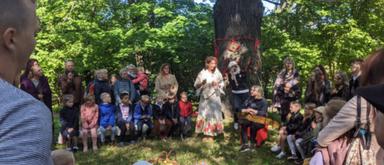
Gaia School has a special role in the local community.
We organise trainings and events not only for our families but also for wider audience presenting Gaia education principles. As a green school we spread the information about sustainable lifestyle among our families as well as among the wider community.
Our teachers and students particiapate annually on World Clean Up Day, taking care on the local neighbourhood.
We make strong collaboration with several enterprises aimig to develop our school garden.
Economic Framework
Gaia School is a non-profit private school, registered as NGO. Its activities are funded and supported by:
state and municipal subsidies,
tuition fees,
sales of services (training courses for teachers and parents etc),
rent on school premises,
volunteer work.



School Website and other links
Know more about Gaia Kool visiting it’s online material


Energy Systems Course Format and Details
Course format:
Online, flexible modules
Price:
200 GBP
Limited number of partial scholarship available, apply here by 15 Feb 2026
Duration:
5 weeks
Workload:
Approximately 5 hours per week
Structure:
Live sessions, Forums and complimentary material
Live Sessions
Four 2,5 hours interactive sessions with Curtis Ogden
Have questions? We’ve got answers.
No previous experience is required. All you need is a passion for community building and collaboration.
The course is designed to fit busy schedules with around 10 hours per week of flexible study. Though highly encouraged, Live Sessions are not mandatory and are recorded to be watched later.
Yes! The course provides hands-on tools you can apply immediately in your community.
An energy systems course explores how energy flows through living, social, and economic systems, and how these flows shape resilience, equity, and long-term sustainability.
No. This course is accessible and experiential, combining systems science with practical tools and real-world applications.
Entirely online with live sessions, group discussions, and self-paced assignments. You’ll have access to experienced facilitators, a supportive learning community, and rich resource materials.
Yes. The course is designed for people working in community development, sustainability, education, social innovation, and regenerative design.
Participants have life-long access to the course material. Though the course has a defined length, participants can go back to the material any time after the course completion.
Have questions? We’ve got answers.
An energy systems course explores how energy flows through living, social, and economic systems, and how these flows shape resilience, equity, and long-term sustainability.
No. This course is accessible and experiential, combining systems science with practical tools and real-world applications.
Entirely online with live sessions, group discussions, and self-paced assignments. You’ll have access to experienced facilitators, a supportive learning community, and rich resource materials.
Yes. The course is designed for people working in community development, sustainability, education, social innovation, and regenerative design.
Participants have life-long access to the course material. Though the course has a defined length, participants can go back to the material any time after the course completion.
An energy systems course explores how energy flows through living, social, and economic systems, and how these flows shape resilience, equity, and long-term sustainability.
No. This course is accessible and experiential, combining systems science with practical tools and real-world applications.
Entirely online with live sessions, group discussions, and self-paced assignments. You’ll have access to experienced facilitators, a supportive learning community, and rich resource materials.
Yes. The course is designed for people working in community development, sustainability, education, social innovation, and regenerative design.
Participants have life-long access to the course material. Though the course has a defined length, participants can go back to the material any time after the course completion.
An energy systems course explores how energy flows through living, social, and economic systems, and how these flows shape resilience, equity, and long-term sustainability.
No. This course is accessible and experiential, combining systems science with practical tools and real-world applications.
Entirely online with live sessions, group discussions, and self-paced assignments. You’ll have access to experienced facilitators, a supportive learning community, and rich resource materials.
Yes. The course is designed for people working in community development, sustainability, education, social innovation, and regenerative design.
Participants have life-long access to the course material. Though the course has a defined length, participants can go back to the material any time after the course completion.

Education is a key driver in co-creating a regenerative future.
Grow your understanding of energy flows and systems design. Be part of building a more just, regenerative, and sustainable future.
Secure your place today and start your transformative journey!

Speak with us on WhatsApp!