


Training of Trainers
Training of Trainers
Damanhur - Italy (2026)
Damanhur - Italy (2026)
Gaia Education Training of Trainers (ToT) course is answering a worldwide demand for skilled facilitators able to facilitate transformative learning environments and host multi-stakeholder conversations that enable collaborative action.
Face to Face Programme | 5 Days Immersive
Starting September 7th, 2026

What Is the TOT?
Gaia Education Training of Trainers (ToT) course is answering a worldwide demand for skilled facilitators able to facilitate transformative learning environments and host multi-stakeholder conversations that enable collaborative action.
The aim of the Training of Trainers is first and foremost, to help you deepen your experience in how to teach, facilitate and train people by enabling collaboration and participation among a community of learners. In addition, we support and hope to inspire you to identify what you are most deeply called to teach, and most importantly, why participatory methods are so critically important for the engagement of communities and the future of life on Earth.
About Damanhur
Nestled in the alpine foothills north of Piedmont, Italy, between Turin and Aosta, is a truly magical place on earth called Damanhur. In a 15-kilometer area surrounding the lush, green valley of Valchiusella lives a very active, multilingual community of 600 people.
Damanhur is a Federation of spiritual communities, with its own Constitution, culture, art, music, currency, schools and uses of science and technology. Its citizens are open to sharing their knowledge and research with other groups and cultures of the world, with anyone who is interested in exploring these themes. Damanhur holds events at numerous centers, organizations and points of outreach in many cities around the world, and also hosts thousands of visitors each year who participate in tours, seminars, retreats and courses through Damanhur University. The community has attracted interest from scholars, educators and researchers in the fields of art, social sciences, spirituality, medicine and alternative health, economics and environmental sustainability.
Structure of the Training
Monday
Afternoon: Arrival
Evening: Get to know each other, Introduction to the ToT
Tuesday
Morning: Introduction to the Sustainable Development Goals, SDG flash cards and exercises
Afternoon: Facilitator skills, Learning Styles, Participatory Learning, Exercises
Evening: Self organised (movie, presentations)
Wednesday
Morning: Key competencies, Comfort-Discomfort, How to give Feed-back, Mindfulness, 1 Minute Speeches
Afternoon: Leadership Presence, Story Telling, Exercises, Games
Evening: Self organised (movie, presentations)
Thursday
Morning: Learning Cycles, Difficult people, Maximise-Minimise Learning, Facilitation Exercises in pairs, Games, Recap
Afternoon: Rank Awareness, Facilitation Exercises in pairs, 1 Minute Speeches, Recap
Evening: Self organised (movie, presentations)
Friday
Morning: Facilitation Exercises in pairs, Games, 1 Minute Speeches
Afternoon: Facilitation Exercises in pairs, Games, 1 Minute Speeches, Prepare Individual Facilitation
Evening: Self organised (movie, presentations)
Saturday
Morning: Individual Facilitation Exercises , Edge Work, Appreciation Game, Feed-back, Closing Round
Lunch Together
Departure
Deepening the Edge Work
The edge is the meeting point between the known and the unknown, between something being too well known, which makes it boring to us, and too unknown, which makes it confusing. The edge is a zone of high intensity, instability, creativity and innovation. Just as it is possible, through the design of ecological sustainable systems, to increase diversity and life by maximising the edges between neighboring biological communities, so it is possible to create a larger edge effect in community development thereby maximising its benefit to the society as a whole. This module will position Gaia Trainers as maximisers of edges between different communities with differing modes of operation, power structures, cultures, physical environments and worldviews. It will equip trainers with the skilful means to adapt to multiple scenarios and situations and ultimately thrive and help others thrive through creativity and playing for collaborative advantage.
Facilitating Participatory Learning Journeys
The aim of this module is for facilitators to gain the necessary skills and confidence to teach the four dimensions of sustainability in ways that support participants to empower themselves both inwardly and outwardly. These future facilitators will be expected to have knowledge in the areas they plan to teach and this module will prepare them to teach this material in a way that builds a learning community and draws deeply from the group with which they are working. Participants will ride a dynamic balance of meditation practice, experimenting with facilitation and clarifying principles to navigate a holistic educational experience. There will also be ample time for facilitation practice where all participants will gain confidence in using participatory learning tools by taking the lead in assigned sessions.
Sustainable Development Goals – Negotiating Tensions between Global and Local
The world is marked by a strong and creative tension. It is a tension between what is global and what is local. The global face is powerful, and seeking to be more so. But a tide is rising, steadily reinforcing the local, resulting in an increasing ‘Glocalisation’ as the global and local converge. This module will teach edge workers and facilitators how to navigate between the two spheres in language, ethics and implementation. It will support participants to decode relevant UN conventions into meaningful frameworks for transformative action at the local level. Topics include SDGs vertical integration, UNESCO Global Action Programme Priorities Areas, and how to translate global Climate Agreements into action through behaviour and life style changes.
Why should I enrol?
During the Training of Trainers, the participants will:
develop core skills of participatory facilitation and learning
gain confidence in holding groups and building resilient learning communities
facilitate students engagement in critical thinking, problem-solving and decision-making in contexts that are personally relevant to them
decode UN conventions from concept to transformative action
unleash the creativity inherent in edge work
What You Will Gain
Full tutorial support to complete the course and achieve all the learning outcomes
Access to a online platform where you can interact with other participants, and access other materials such as:
an expanded Teacher’s Manual (digital)
a Gaia Youth Activities Guide (digital)
Gaia Education Curriculum (digital)
Gaia Education Training of Multipliers Manual (digital)
Participation Forums and Debates
a Certificate of Completion
Gaia Education Discounts in all online programmes;
A pathway to joining the Gaia Education Certificated Trainers’ RosterFast track Face-to-Face course certification
If you're ready to explore the world of participatory practices, this is the training for you!

Gaia’s 4D Framework: Unique and impactful approach to Sustainability & Regeneration.
Social, Ecological, Economic, and Worldview dimensions combine to offer a holistic approach to sustainability. Gaia’s 4D Framework connects people, nature, local economies, and personal growth to create balanced and resilient comunities and projects.
The programme is divided into four interconnected dimensions: Social, Ecological, Economic, and Worldview.
Each dimension spans eight weeks and can be taken individually as Focus Course or as part of the full course.

Social
Enhance your leadership and collaboration skills with practical tools to empower communities, advance social justice, create inclusive solutions, and implement effective governance strategies.
Starts: 6 October 2025
Ecological
Master regenerative design and ecological practices to restore nature, applying principles of permaculture, ecosystem resilience, and innovative environmental solutions.
Starts: 12 January 2026
Economic
Develop regenerative economic models by integrating local economies, ethical finance, conscious consumption, and systems that foster prosperity without depleting natural resources.
Starts: 25 May 2026
Worldview
Expand your perspective by embracing holistic values, ecological ethics, and transformative spirituality while balancing innovation with ancestral wisdom.
Starts: 23 March 2026


ToT Programme Format and Details
Course format:
Face to Face | Immersive
Price:
834 GBP
Duration:
5 Days
Workload:
Approximately 8 hours per day
Structure:
Group Sessions, Individual Sessions, Learning Exercises and Practice Exercises
Facilitator & Logistic
Main Facilitator and Coordinator: Macaco Tamerice
Meals and Accommodatio
Programme Coordinator and Main Facilitator
The GEDS Full Course is guided by dedicated professionals with real-world experience across all dimensions of sustainability.
Meet some of our facilitators:

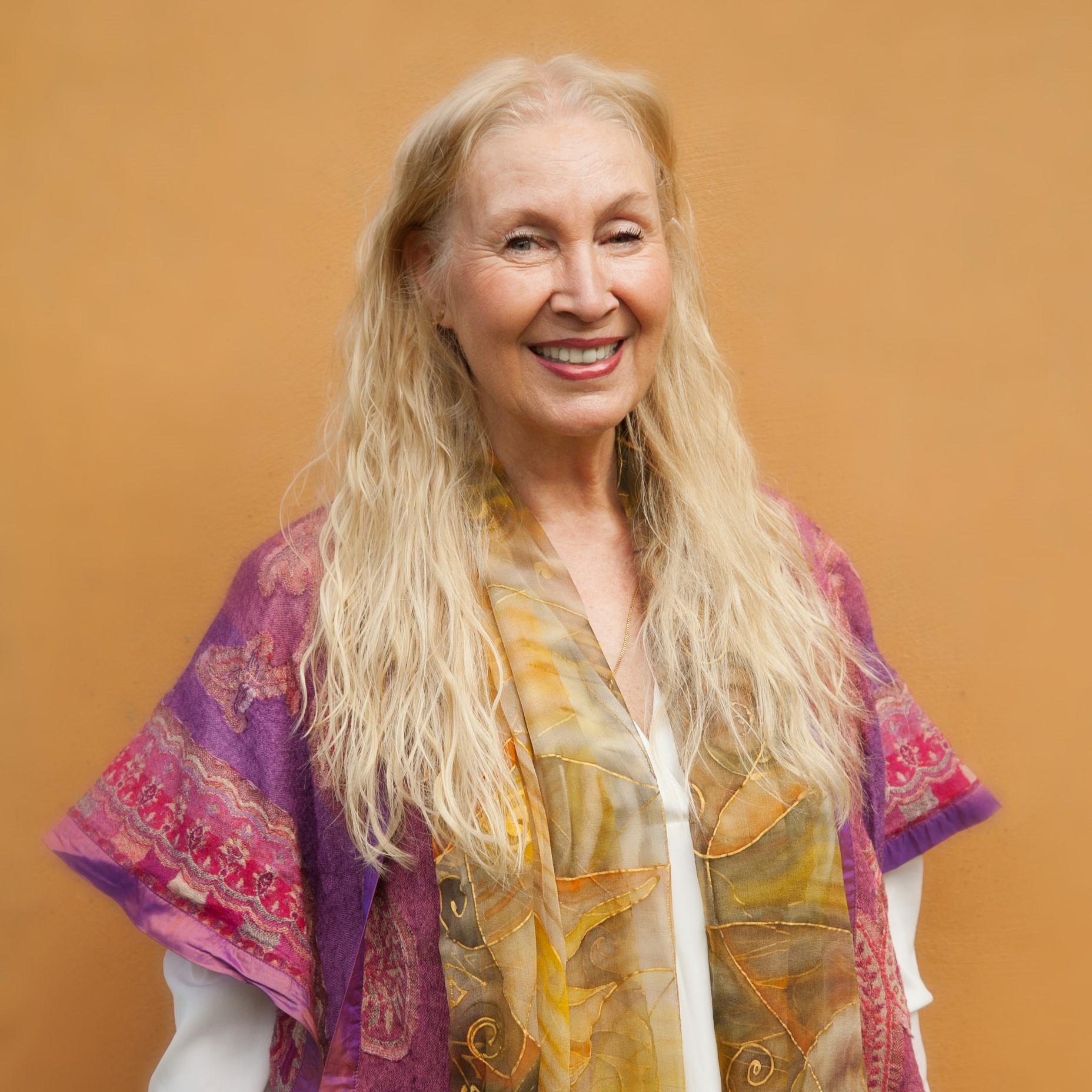
Macaco Tamerix
Macaco is a sociologist, a life coach for meaningful relationships specialized in community-building, inner transformation, leadership and conflict resolution. She has been living at Damanhur since 1993, where she has held many roles of social and artistic responsibility, not last leading the Federation. In 2008, she became Vice President and then President of the Global Ecovillage Network- Europe (GEN Europe) until 2015. She is one of GEN’s UN representatives and the President of the NGO Damanhur Education. Macaco is a multi-lingual international speaker, facilitator of many courses and seminars and a certified GEESE Educator (since 2011) Trained in music and voice, she has toured as a professional jazz singer in Europe, Canada and Japan and has lead voice classes and seminars since 1984. In her life she has been active in many fields of sustainability, from the social realm and engaged spirituality to economy and eco-building. She lives in a straw bale house that she built together with her husband.
Coordinator and Main Facilitator
The GEDS Full Course is guided by dedicated professionals with real-world experience across all dimensions of sustainability.
Meet some of our facilitators:
Macaco Tamerice
Macaco is a sociologist, a life coach for meaningful relationships specialized in community-building, inner transformation, leadership and conflict resolution. She has been living at Damanhur since 1993, where she has held many roles of social and artistic responsibility, not last leading the Federation. In 2008, she became Vice President and then President of the Global Ecovillage Network- Europe (GEN Europe) until 2015. She is one of GEN’s UN representatives and the President of the NGO Damanhur Education. Macaco is a multi-lingual international speaker, facilitator of many courses and seminars and a certified GEESE Educator (since 2011) Trained in music and voice, she has toured as a professional jazz singer in Europe, Canada and Japan and has lead voice classes and seminars since 1984. In her life she has been active in many fields of sustainability, from the social realm and engaged spirituality to economy and eco-building. She lives in a straw bale house that she built together with her husband.
Testimonials

“The curriculum of the course and especially how Macaco delivered it and her facilitation impacted profoundly my way of facilitating spaces I am holding for others.”
– Participant in the 2025 edition
"It gave me tools and knowlodge, but also trust that I can do it!”
– Participant in the 2025 edition
“Macaco is a great teacher, maybe the best I have ever met in my life.”
– Participant in the 2025 edition
"Everything was perfectly organised and new situations were graciously held and solved..”
– Participant in the 2025 edition
“I loved the participatory learning in all its senses for sure! The programme is very well designed for people to really integrate the learning and at the same time experience living for a week in a little community.”
– Participant in the 2025 edition
"very grateful for the experience!!! feel very honored to be able to live this course in such an amazing place and with such amazing people!”
– Participant in the 2025 edition
Registration
See here the options for registrations and Payments
Have questions? We’ve got answers.
An energy systems course explores how energy flows through living, social, and economic systems, and how these flows shape resilience, equity, and long-term sustainability.
No. This course is accessible and experiential, combining systems science with practical tools and real-world applications.
Entirely online with live sessions, group discussions, and self-paced assignments. You’ll have access to experienced facilitators, a supportive learning community, and rich resource materials.
Yes. The course is designed for people working in community development, sustainability, education, social innovation, and regenerative design.
Participants have life-long access to the course material. Though the course has a defined length, participants can go back to the material any time after the course completion.
As Albert Einstein once said, “Everything is energy, that's all there is to it.” It is the current and currency of life. It is the largely invisible, immaterial substance that propagates life and animates our bodies with movement. J. Krisnamurti said further - “Energy is thinking, feeling; it is interest, enthusiasm, greed, passion, lust, ambition, hate. Painting pictures, inventing machines, building bridges, making roads, cultivating the fields, playing games, writing poems, singing, dancing, going to the temple, worshipping - these are all expressions of energy.” From an energy systems perspective, energy refers to the crucial “flows” that are important to the long-term vitality of the system in question, whether a person, a community, an ecosystem, an economy.
Life is a pattern of energies. We might think of these patterns as systems of different kinds. Systems have a sort of integrity, perhaps defined by a border or boundary that we know is largely fictional or at least fluid. Energy systems focus our attention on the movement of resources, tangible and intangible, that maintain the health and renewing capacity of the system in question. Dr. Sally Goerner writes, “we live in a matrix of forces and flows that fuel activity, drive change, and shape behavior in living, non-living, and supra-living systems such as ecosystems and economies.”
You are energy. You are an energy system. You are made up of smaller energy systems (circulatory, respiratory) and are a part of larger energy systems (family, neighborhood, organization, society). These systems are not fixed or static. They are diverse and dynamic. Energy systems keep you alive and you in turn are charged with supporting the health of those systems, small and large.
Seeing and understanding energy flows so that we can engage with them in positive ways is core to the role of being respectful, responsible and effective human beings. As a very skilled regenerative builder and agriculturist once said to me, “The most important question to ask is ‘What am I not seeing?’ Too many still do not see or consider the importance of the flows that bring health and vitality to Life. As a result, we see the proliferation of intersecting “crises” around the world. The good news is that there are ways we can learn to better attend to energetic flows and exchanges of all kinds, at and across different scales, to align with Life’s inherent wisdom and trajectory towards wholeness.


Start your Participatory Learning Journey ow!
Complete this certification step to qualify as a Gaia Education Trainer. This requirement moves you from a practitioner to a recognized educator in regenerative design.

Speak with us on WhatsApp!