



What if Women Designed the city?
A Post-War
Regenerative
Reconstruction
Summer
Laboratory
in Gaza
A Post-War
Regenerative
Reconstruction
Summer
Laboratory
in Gaza
In partnership with the
University of Palestine



A Post-War Regenerative Reconstruction Summer Laboratory in Gaza
How can the reconstruction of Gaza become an opportunity to develop neighbourhoods that are more resilient and life-affirming?
One course. Four dimensions. Unlimited impact.
This six-week online Summer Laboratory invites architecture and engineering students from the University of Palestine to explore how regenerative design, systems thinking and the spatial knowledge of women and girls can inform the post-war reconstruction of Gaza.
Through walking observations, spatial diaries, participatory mapping and collaborative design, participants will develop proposals for the regeneration of Gaza neighbourhoods that integrate ecological restoration, active travel, public space, natural surveillance and collective wellbeing.
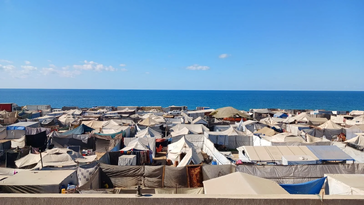
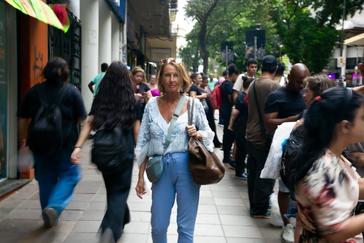
Rebuilding begins by listening – to people, place and possibility.
Picture by Asmaa Alwhidy
Key Benefits
Gain a comprehensive understanding of sustainability.
Be part of a global network of changemakers.
Earn a certificate upon completion from a curriculum recognised by UNESCO.
Opportunity to upgrade your GEDS into a Masters/PhD degree with Ubiquity University.
-
List Itemfghfgh fghfdfv fdf
-
List Item
Skills Gained
Address complex challenges holistically.
Foster inclusion, equity, and social justice.
Economic perspectives and tools to align work, life, and finances.
Enhance projects and restore ecosystems.
Communicate effectively across diverse cultures and communities.
Sustainable project management and strategic planning.
Strategies that enhance resilience and flexibility.
Impact assessment using sustainability indicators.
Become part of a new generation of regenerative architects and engineers shaping the future of Gaza – one neighbourhood at a time.
The programme is jointly led by international urbanist Dr May East, Director of the Cities Programme at UN House Scotland, and Dr Nadine Abu-Shaaban, Associate Professor of Construction Management.
Course Details
While cities cover just 4% of the planet’s surface, they consume 80% of global energy, generate 75% of carbon emissions, and rely on more than 75% of the world’s natural resources. The challenges are immense, but so is the regenerative potential rooted in the bio-cultural-spatial uniqueness of each place.
Adopting a regenerative design perspective, this 7-week journey shifts the focus from “what’s wrong” to “what’s strong.”
Participants will uncover untold narratives of the city, weaving them into four thematic areas:
Sense of Place
Green Space
Active Travel
Safety
Key course information
Course type:
Online
Date:
24 August – 28 September 2026
Facilitation:
Guided by May East, PhD. Live
Interaction:
Forum interaction with peers to support learning journey
Certificate:
Provided upon successful completion
Course Facilitator
The GEDS Full Course is guided by dedicated professionals with real-world experience across all dimensions of sustainability.
Meet some of our facilitators:

May East, PhD
International urbanist specialised in nature-positive and gender-sensitive cities. A UNITAR Fellow, her current work involves the use of regenerative design approaches for shaping 20-minutes neighbourhoods, mining cities and informal settlements.
May holds a Master of Science in Spatial Planning with specialization in the rehabilitation of abandoned villages and a PhD in Architecture and Urban Planning on the topic What if Women Designed the City?
She was a co-founder of Gaia Education and led the organisation for over a decade. Currently, she serves as the UN House Scotland Director of Cities programme. May was awarded Women of the Decade in Sustainability and Leadership by Women Economic Forum in 2019.
Lorem ipsum dolor sit amet, consectetur adipiscing elit. Ut mattis dolor massa, eu congue lorem lobortis vitae. Suspendisse id accumsan neque. Cras convallis nibh nec massa placerat, a egestas urna vulputate. Ut quis mi ac odio accumsan vehicula. In mollis lorem et risus molestie tristique. Cras gravida, lacus ut ultrices convallis, dolor magna aliquet libero, et rutrum libero nibh vel enim. Nullam lacinia lacus nec facilisis consectetur.
Course Facilitator

May East, PhD
May East is an international urbanist specialised in nature-positive and gender-sensitive cities. A UNITAR Fellow, her current work involves the use of regenerative design approaches for shaping 20-minutes neighbourhoods, mining cities and informal settlements.
Enter HTML on the right →
She holds a Master of Science in Spatial Planning with specialization in the rehabilitation of abandoned villages and a PhD in Architecture and Urban Planning on the topic What if Women Designed the City? She was a co-founder of Gaia Education and led the organisation for over a decade. Currently, she serves as the UN House Scotland Director of Cities programme. May was awarded Women of the Decade in Sustainability and Leadership by Women Economic Forum in 2019.
What is Included in this Course?
The Social Dimension is one part of Gaia's unique 4D Model, which integrates social, ecological, economic and worldview dimensions to create lasting change.

Week 1
The Context - A Historic Gender Gap in Urban Planning
The programme opens with a reflection on the intersection between three megatrends informing the world we live in: women’s repositioning in society, the accelerated pace of urbanisation and the imperative of decarbonisation of our lifestyles. It draws on recent reports and documents from international ‘agenda holders’ and ‘knowledge brokers’ that reaffirm the historical fact that cities have predominantly been planned and built by using men’s experience as a reference. We then discuss the implications of cities tending to function better for men than for women, children, older people, all levels of ableness, and gender identities and how cities are bridging this gap in urban planning.
Participants will be invited to:
• Examine how these megatrends influence the bio-cultural-spatial uniqueness of their place.
• Explore the ongoing impact of Modernism and Fordism on the continuities and discontinuities of cities, towns and neighbourhoods.
• Reflect on unique gender-sensitive policies and practices from cities such as Vienna, Lyon, Glasgow and Rio de Janeiro, which aim to bridge the historic gender gap in urban planning.
The programme opens with a reflection on the intersection between three megatrends informing the world we live in: women’s repositioning in society, the accelerated pace of urbanisation and the imperative of decarbonisation of our lifestyles. It draws on recent reports and documents from international ‘agenda holders’ and ‘knowledge brokers’ that reaffirm the historical fact that cities have predominantly been planned and built by using men’s experience as a reference. We then discuss the implications of cities tending to function better for men than for women, children, older people, all levels of ableness, and gender identities and how cities are bridging this gap in urban planning.
Participants will be invited to:
• Examine how these megatrends influence the bio-cultural-spatial uniqueness of their place.
• Explore the ongoing impact of Modernism and Fordism on the continuities and discontinuities of cities, towns and neighbourhoods.
• Reflect on unique gender-sensitive policies and practices from cities such as Vienna, Lyon, Glasgow and Rio de Janeiro, which aim to bridge the historic gender gap in urban planning.

Week 2
Co-evolving Mutualism - New Maps for New Territories
This module examines the theories of change shaping feminist cities and introduces the concept of co-evolving mutualism and its application across scales. It engages in practices like ‘mapping with your feet’ and ‘exposing mental models in the open air’ to uncover overlooked narratives from those who have been largely absent from urban planning. The module also introduces the concept of leverage points, emphasizing how targeted interventions can create lasting systemic impacts.
Participants will be invited to:
• Consider how to move beyond a zero-sum perspective while reflecting on how cities that work for women and girls can ultimately benefit everyone;
• Develop and apply an investigative regenerative framework tailored to their own contexts;
• Critically evaluate the impact of tokenistic consultations versus practices of deep listening;
• Identify effective ways to intervene in urban systems, organising leverage points in main analytical categories.
This module examines the theories of change shaping feminist cities and introduces the concept of co-evolving mutualism and its application across scales. It engages in practices like ‘mapping with your feet’ and ‘exposing mental models in the open air’ to uncover overlooked narratives from those who have been largely absent from urban planning. The module also introduces the concept of leverage points, emphasizing how targeted interventions can create lasting systemic impacts.
Participants will be invited to:
• Consider how to move beyond a zero-sum perspective while reflecting on how cities that work for women and girls can ultimately benefit everyone;
• Develop and apply an investigative regenerative framework tailored to their own contexts;
• Critically evaluate the impact of tokenistic consultations versus practices of deep listening;
• Identify effective ways to intervene in urban systems, organising leverage points in main analytical categories.

Week 3
Sense of Place: the Depths of Place and Belonging
This week focuses on sense of place that speaks about meaningful relationships between people and specific locations and its three manifestations as place identity, where individuals define themselves through deep interactions with a particular locality; place attachment, an emotional bond that fosters a sense of belonging and connection to the environment; or place dependence, where attachment arises from functional reliance on a specific location. By exploring these dimensions, participants will gain insights into how to enable sense of place to evolve in communities everywhere.
Participants will be able to evaluate the importance and applicability of the following leverage points:
• Developing spaces for gathering and belonging;
• Designing urban extensions while evolving the whole;
• Shifting from a mentality of maintenance to an attitude of care;
• Co-developing sympathetic infrastructure enabling a sense of co-ownership and care;
• Practising a culture of deep listening in the design and development of local plans;
• Infusing beauty into cities’ form and function;
• Developing inter-generational housing for a maturing humanity.
This week focuses on sense of place that speaks about meaningful relationships between people and specific locations and its three manifestations as place identity, where individuals define themselves through deep interactions with a particular locality; place attachment, an emotional bond that fosters a sense of belonging and connection to the environment; or place dependence, where attachment arises from functional reliance on a specific location. By exploring these dimensions, participants will gain insights into how to enable sense of place to evolve in communities everywhere.
Participants will be able to evaluate the importance and applicability of the following leverage points:
• Developing spaces for gathering and belonging;
• Designing urban extensions while evolving the whole;
• Shifting from a mentality of maintenance to an attitude of care;
• Co-developing sympathetic infrastructure enabling a sense of co-ownership and care;
• Practising a culture of deep listening in the design and development of local plans;
• Infusing beauty into cities’ form and function;
• Developing inter-generational housing for a maturing humanity.

Week 4
Green Spaces for People and Wildlife
This week explores how to design to increase rather than limit women, girls and children’s options in green spaces such as parks, gardens, woods, nature reserves, playing fields, and community allotments. The emphasis is on design that supports less confident groups – young girls, people with health conditions or impairments, and the elderly – to stake a claim to their green areas. This module also explores the need to increase the proportion of land given over to a wilder, less cultivated and the acceptance of wildlife’s right to evolve and diversify within urban environments.
Participants will be able to evaluate the importance and applicability of the following leverage points:
• Cultivating biophilia;
• Redistributing land use and budget allocation for equality and gendered landscapes;
• Creating conditions for wildness;
• Growing and foraging for health and wellbeing;
• Designing adventurous playgrounds for children and carers;
• Maximising use of available local resources in urban interventions.
This week explores how to design to increase rather than limit women, girls and children’s options in green spaces such as parks, gardens, woods, nature reserves, playing fields, and community allotments. The emphasis is on design that supports less confident groups – young girls, people with health conditions or impairments, and the elderly – to stake a claim to their green areas. This module also explores the need to increase the proportion of land given over to a wilder, less cultivated and the acceptance of wildlife’s right to evolve and diversify within urban environments.
Participants will be able to evaluate the importance and applicability of the following leverage points:
• Cultivating biophilia;
• Redistributing land use and budget allocation for equality and gendered landscapes;
• Creating conditions for wildness;
• Growing and foraging for health and wellbeing;
• Designing adventurous playgrounds for children and carers;
• Maximising use of available local resources in urban interventions.

Week 5
Encouraging Active Travel as a Way of Life
This week examines the practice of active travel – traveling with purpose using one’s own energy – through modes such as walking, cycling, wheeling, and scooting as a way of life. The discussion focuses on policies and practices worldwide that support the transition from car-centric to people-centric cities where traffic is evaporated, and people work with nature to create places that function at a speed conducive to living well.
Participants will be able to reflect on the importance and applicability of the following leverage points:
• Devising a library of women-tailored bike saddles;
• Making practical cycle awareness training mandatory for drivers;
• Designing ‘fresh air routes’ and low emissions zones from the perspective of women and infants;
• Rethinking the bus fare system for ‘trip-chaining’, and redesigning buses for encumbered travel;
• Delineating and flowing through cycling infrastructure.
This week examines the practice of active travel – traveling with purpose using one’s own energy – through modes such as walking, cycling, wheeling, and scooting as a way of life. The discussion focuses on policies and practices worldwide that support the transition from car-centric to people-centric cities where traffic is evaporated, and people work with nature to create places that function at a speed conducive to living well.
Participants will be able to reflect on the importance and applicability of the following leverage points:
• Devising a library of women-tailored bike saddles;
• Making practical cycle awareness training mandatory for drivers;
• Designing ‘fresh air routes’ and low emissions zones from the perspective of women and infants;
• Rethinking the bus fare system for ‘trip-chaining’, and redesigning buses for encumbered travel;
• Delineating and flowing through cycling infrastructure.

Week 6
Systems Thinking for Safety Change
This week explores the nuanced distinction between perceived safety—a subjective fear based on judgments about the possibility of harm—and the direct experience of feeling unsafe due to actual harm or threat. The focus is on strategies to expand the use of public spaces in the evenings and the role of natural surveillance, ‘the eyes on the street’ and ‘the guardians who belong’ in enhancing safety perceptions and deterring criminal behaviour.
Participants will be able to evaluate the importance and applicability of the following leverage points:
• Building confidence thorough easy-to-access self-defence training, and seminars on rights of women and domestic violence.
• Working with men to redistribute power, balance representation and transform legal and planning systems.
• Improving natural surveillance by design.
• Scheduling regular patrol walks by ‘wardens who belong’.
• Expanding the use of public space in the evenings by creating favourable bio-cultural-spatial conditions.
• Co-creating transitional safeguarding public spaces for young women.
• Co-designing places with (not only for) teenage girls.
This week explores the nuanced distinction between perceived safety—a subjective fear based on judgments about the possibility of harm—and the direct experience of feeling unsafe due to actual harm or threat. The focus is on strategies to expand the use of public spaces in the evenings and the role of natural surveillance, ‘the eyes on the street’ and ‘the guardians who belong’ in enhancing safety perceptions and deterring criminal behaviour.
Participants will be able to evaluate the importance and applicability of the following leverage points:
• Building confidence thorough easy-to-access self-defence training, and seminars on rights of women and domestic violence.
• Working with men to redistribute power, balance representation and transform legal and planning systems.
• Improving natural surveillance by design.
• Scheduling regular patrol walks by ‘wardens who belong’.
• Expanding the use of public space in the evenings by creating favourable bio-cultural-spatial conditions.
• Co-creating transitional safeguarding public spaces for young women.
• Co-designing places with (not only for) teenage girls.

Week 7
The Cohort Narrative
Since fostering gender equality is a fundamental trend of the 21st century and an essential aspect of good urbanism, this week is an invitation for the participants, to embrace the exciting, liberating and unprecedented prospects that come from designing cities that work for all. Thus, together we will weave the insights of the previous weeks and focus on developing a mosaic of visions that could be leveraged by the participants themselves. If we cannot imagine the future we want to create we will never get there!
Since fostering gender equality is a fundamental trend of the 21st century and an essential aspect of good urbanism, this week is an invitation for the participants, to embrace the exciting, liberating and unprecedented prospects that come from designing cities that work for all. Thus, together we will weave the insights of the previous weeks and focus on developing a mosaic of visions that could be leveraged by the participants themselves. If we cannot imagine the future we want to create we will never get there!

Learn more about the book that inspires the course

This course is inspired on May's book What if Women Designed the City?.
See what those who shape cities think about the book here.

A Post-War Regenerative
Reconstruction Summer
Laboratory in Gaza
Course Support
This programme is supported by an Ove Arup Foundation grant to commission research or instigate teaching initiatives that enhance new thinking and knowledge in the built environment through the interdisciplinary nature of design.
