

My Journey with Gaia Education, by Sally Bogale Co-CEO
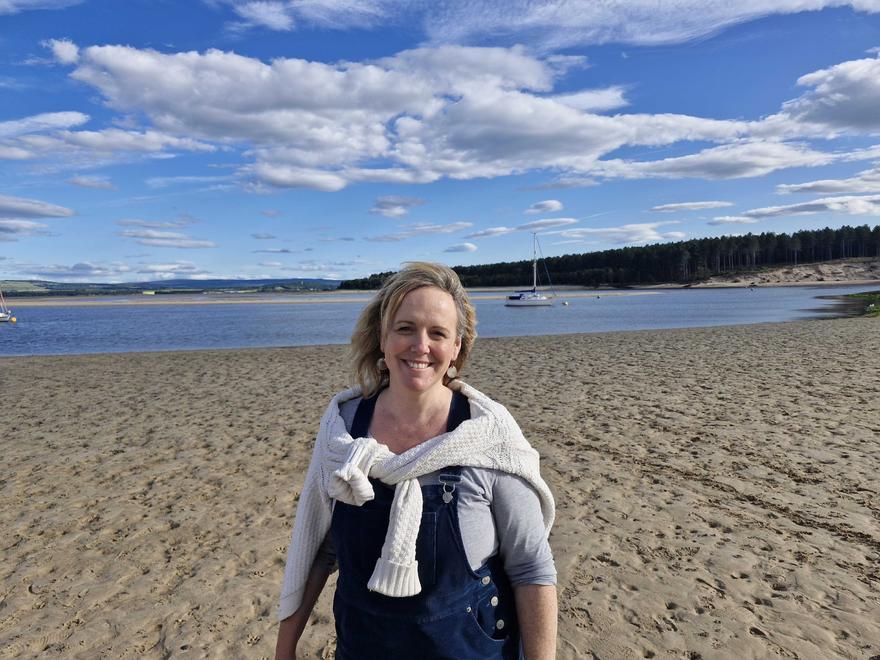
In 2004, at the age of 26, I was at a crossroads in my life. I was heading back to the UK after two years teaching English in a Rwandan secondary school for the Voluntary Service Overseas.
I had gone out to Rwanda with the best of intentions - to help schoolgirls in a poverty-stricken country that was still recovering from a terrible genocide 10 years before. Many of the girls I taught had either suffered in the midst of the genocide or had been refugees in neighbouring countries. Whilst I definitely accelerated their English language ability, it was I who received the education.
Outside the bubble of my privileged British upbringing, I was deeply humbled by the kindness, determination and bravery of the people I lived and worked with. Equally, I was shown my ignorance regarding the devastating legacy of colonisation and unfair post-colonial influences on Rwanda and other previously colonised countries. I had not previously understood that the global economic system is far from a level playing field, and that extractive international policies are continually exploiting people, nature, and economies in the most vulnerable countries. It felt absurd that the consumption demands and political strategies of richer countries were major contributors to myriad problems around the world, only for these same countries to send their NGOs and other agencies to help fix the problems.
I came home with very different priorities, seeking pathways for how the UK might thrive without negatively impacting other countries and the natural world. Was it possible to conceive of wealthy human societies connecting peacefully and thriving within planetary boundaries? A bold, probably naive, endeavour… the global economic system seemed, and frankly still seems, unstoppable despite the disastrous consequences becoming more and more apparent.
Luckily for me, I found Ecovillage Findhorn in Scotland, and through that the Global Ecovillage Network (GEN) and Gaia Education. Within these networks, communities of all different types - urban, rural, rich, poor, indigenous, traditional, radical - all over the world were experimenting with grassroots ways to thrive in conscious harmony with each other and their local ecosystem. I felt like I’d come home!
In response to ever increasing interest, these ‘Global Ecovillage Educators for a Sustainable Earth’ - or GEESE, as they became known - created a 4D Whole Systems Design Framework to distil their ongoing learning and experimentation, and they set up Gaia Education in 2005 as the educational vehicle for programmes centred around its principles.

The 4D framework provides toolkits, and inspiration for anyone in any context to build greater social, economic, and ecological resilience in their community, as prescribed by the United Nations. Crucially, however, it also adds a ‘Worldview’ dimension to help us reassess how we live and to find ways to (re)connect more deeply with ourselves, each other, and the natural world, in whichever ways feel most appropriate. This way, any actions we take are founded on greater empathy, care, and affinity with all beings, and we are more likely to contribute to a global cultural transition from destructive human systems to ‘regenerative’, life-giving cultures.
I have now been working with Gaia Education since 2016 and Co-CEO since 2022, and my passion grows ever stronger for the work we are doing. I have had the privilege of supporting pioneering international partners on the front line of climate change effects and ecosystem degradation as they lead their communities towards deeper resilience in challenging circumstances. I have learned so much from the latest thinking on localisation, regeneration, worldview deepening, and much more. And I have had the privilege of working with a dedicated team, constantly finding new ways to feed our community of practice with what they want to learn about - from indigenous knowledge systems to permaculture, to cultivating regenerative livelihoods, to bioregioning. Our work is perhaps not so visible yet under the flood of dramatic negative news and the loud roar of collapsing international systems, but I believe we are planting seeds that are starting to bud, and that the results of years of hard work in this field will provide a sense of hope and power to people and communities when they need it most.
Of all Gaia Education’s courses, our Design for Sustainability and Regeneration programme (GEDS) provides the longest and deepest dive into the principles of the four dimensions and some of the most exciting ideas and projects exemplifying such principles across the world.
Experienced facilitators support participants to use what they have learned to create their own project designs, adapted to the needs and preferences of their own local communities. Participants become connected with a global community aligned in their efforts and sharing their learning with each other. In short, we realise we are not alone!
If, like for me, the 4D framework and GEDS programme sound like hope in these troubled times, this could be the course for you!
To celebrate Gaia Education’s 20th birthday, for July only, GEDS is offering a 50% discount. Grab it while you can!
Sally Bogale
Gaia Education Co-CEO

4 comments
Great reflection on Sally Bogale’s journey and how Gaia Education connects personal transformation with global change. It’s inspiring to see how education can shift perspectives toward more regenerative and community-focused thinking.
In the context of digital transformation in learning ecosystems, education software development services https://www.cleveroad.com/blog/education-software-development-companies/ also play an important role in scaling access to such educational models worldwide, making it easier for organizations to deliver impactful learning experiences online.
Thanks for sharing this story—it really highlights the human side of education for sustainability.
Thank you for sharing this, Sally - what a profound journey from Rwanda to Findhorn, and what an honest reflection on how the experience reshaped your understanding of global systems.
Your point about richer countries contributing to problems and then sending agencies to "fix" them really resonates. It's a dynamic we see playing out across many sectors - including in tech, where solutions are often designed for communities rather than with them.
What strikes me most about the 4D framework is the Worldview dimension. So many systemic change efforts focus purely on tools and outputs - whether that's urban planning, regenerative agriculture, or even emerging fields like ai automation for healthcare - but without that inner shift in values and relationships, the same extractive logic tends to creep back in through the back door.
The GEESE model of grassroots, community-led experimentation feels like the antidote to top-down "solutionism." Real resilience seems to grow from the ground up, exactly as you describe.
Congratulations on Gaia Education's 20th year, and on everything the team has built. The seeds you mention - I think more people are starting to feel them sprouting than the news cycle would have us believe.
I'll be sharing the GEDS discount with a few people I know who've been looking for exactly this kind of grounding.
The tension you describe - witnessing how wealthy nations' consumption patterns fuel crises, then dispatch "helpers" to address the symptoms - is something I keep coming back to in my own work. Real change seems to demand exactly the kind of worldview shift your 4D framework centres.
It's fascinating how this principle applies far beyond ecovillages. Even in fields like ai automation for healthcare, the difference between extractive and regenerative approaches comes down to the same question: are we designing with communities and their real needs, or simply optimising systems that serve existing power structures?
The Global Ecovillage Network's answer - diverse communities worldwide learning from each other across cultural and economic divides - feels like a model worth paying attention to well beyond sustainability circles.
Twenty years of planting these seeds is no small thing. Wishing Gaia Education many more.
This is an inspiring reflection on how personal experiences can reshape the way we understand sustainability and global development. I especially appreciate the emphasis on community-led solutions and the 4D framework, which connects social, economic, ecological, and worldview perspectives. A thoughtful reminder that meaningful change begins with how we see our relationship with communities and the natural world. Telkom University
Leave a comment