

What Is Energy Systems Science? A Way of Seeing the Flows That Keep a System Alive
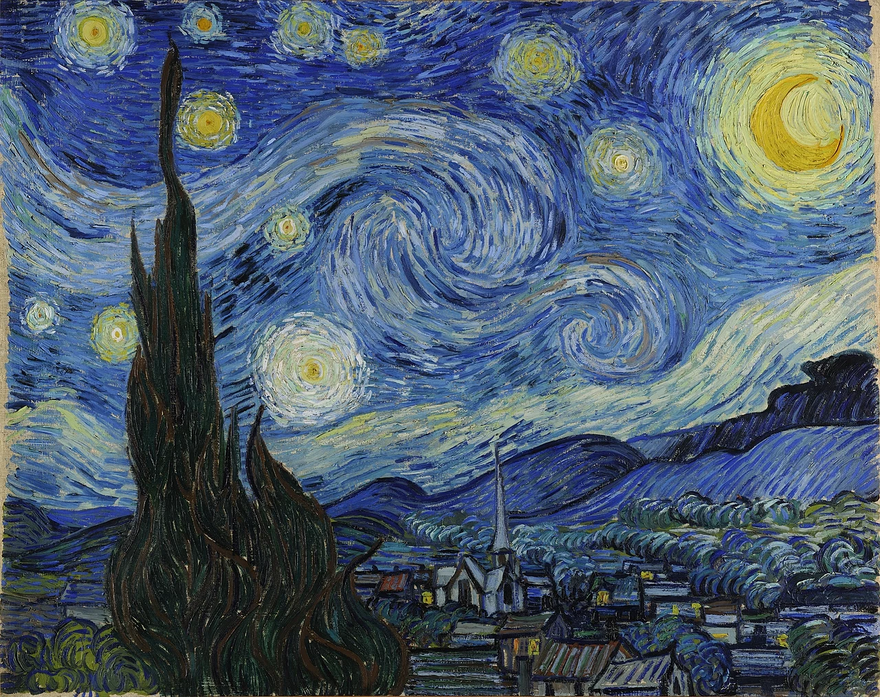
Stand in front of Van Gogh's "Starry Night" and you feel something moving, even though the paint has been dry for more than a century. Years ago, scientists studying turbulence found that the swirls he painted match real patterns of airflow, the kind that only show up in equations and wind tunnels. He could not have known the math. He saw the motion anyway, and he put it on the canvas so the rest of us could see it too.
That is most of what energy systems science asks of us. Learn to see the motion. Everything that looks still is actually in flux, and the health of a system depends on what is moving through it.
Energy means flow, not just electricity
"When I say energy, I do not mean only kilowatts and fuel. I mean whatever flow is crucial to the long-term vitality of a system, whether that system is a person, a community, an ecosystem, or an economy." - Curtis Ogden
Some of those flows are obvious. Money moving through an economy. Nutrients moving through soil. Blood moving through a body. Information moving through a network. Others are quieter and just as real. Trust between neighbours. Attention in a meeting. The felt sense of belonging that makes someone speak up rather than stay quiet. Grief moving through a room until it finally lifts.
A network map can show you the parts and who is connected to whom. It is a useful snapshot. But it freezes something that is never actually frozen. The quality of any living system comes down to what moves through the connections between its parts, at what rate, and whether it reaches everyone or pools in a few places.
Energy is and always will be the currency of life.
The science behind it
"This is not a metaphor I made up. The science traces to Sally Goerner and her colleagues, who wrote about flow network science and how energy and resources circulate through living networks. Their work asks what separates the networks that stay healthy over time from the ones that wither.
I work alongside the Research Alliance for Regenerative Economics, which carries this thinking into how we organise money, food, and care. The findings hold up across very different systems. A forest, a watershed, a regional economy, and a human body turn out to obey similar principles about how flows need to circulate to keep the whole thing alive."
- Curtis Ogden
The polycrisis, read as blocked flow
Once you start seeing in terms of flow, a lot of what we call the polycrisis looks different. Much of it is circulation that has been blocked or hoarded.
"I grew up in Flint, Michigan. When highways were cut through the city's Black neighbourhoods, they severed the circulation those neighbourhoods depended on, the movement of money, people, opportunity, and care. The parts that got cut off began to decay, the way tissue goes necrotic when its blood supply is choked. And here is the part people miss. The whole city paid, not only those neighbourhoods. A body cannot wall off a dying limb and stay well. Neither can an economy.
When resources concentrate at the top and the middle hollows out, when trust drains out of institutions, when knowledge gets locked behind a few gates, you are looking at the same pattern in different clothing. Flow interrupted. That reframe matters, because it points toward repair instead of blame. The work becomes restoring circulation."
- Curtis Ogden
Two-eyed seeing
"I try to hold two views at once. There is the physical world, the one we can measure, count, and map. And there is the subtle energetic world, the one we register in our bodies and in the room before anyone names it. I learned to call this two-eyed seeing from Indigenous teachers, and it has shaped how I move through this material." - Curtis Ogden
You already practise it more than you think. You walk into a meeting and feel the tension before a word is spoken. You sense when a conversation has shifted from guarded to open. Energy systems science asks us to take that perception seriously and to pair it with the rigour of the science, rather than choosing one eye and shutting the other.
Making the invisible visible
Most of these flows are hard to see directly, which is why art keeps coming up in this work. Van Gogh caught airflow. The "Physical Energy" statue in Kensington Gardens is a bronze horse and rider that somehow reads as pure motion, a sculptor's way of holding a moment of force still long enough for us to look at it.
That is the practice underneath all of this. We learn to notice what we usually cannot, to feel where the current is running and where it has stalled, and then to act in ways that help vital flows reach every part of the system. It is not abstract. Once you can see it, you cannot unsee it, and your sense of what to do next starts to change.
If this way of seeing speaks to something you have already half-noticed in your own work, you might find a home in our online course. We move slowly through the ideas, ground them in real stories, and practise the seeing together. The next cohort begins 28 September.

0 comments
Leave a comment