

Sustainable Development Goals - are they still a relevant framework?

This article was written by Peter Gringinger.
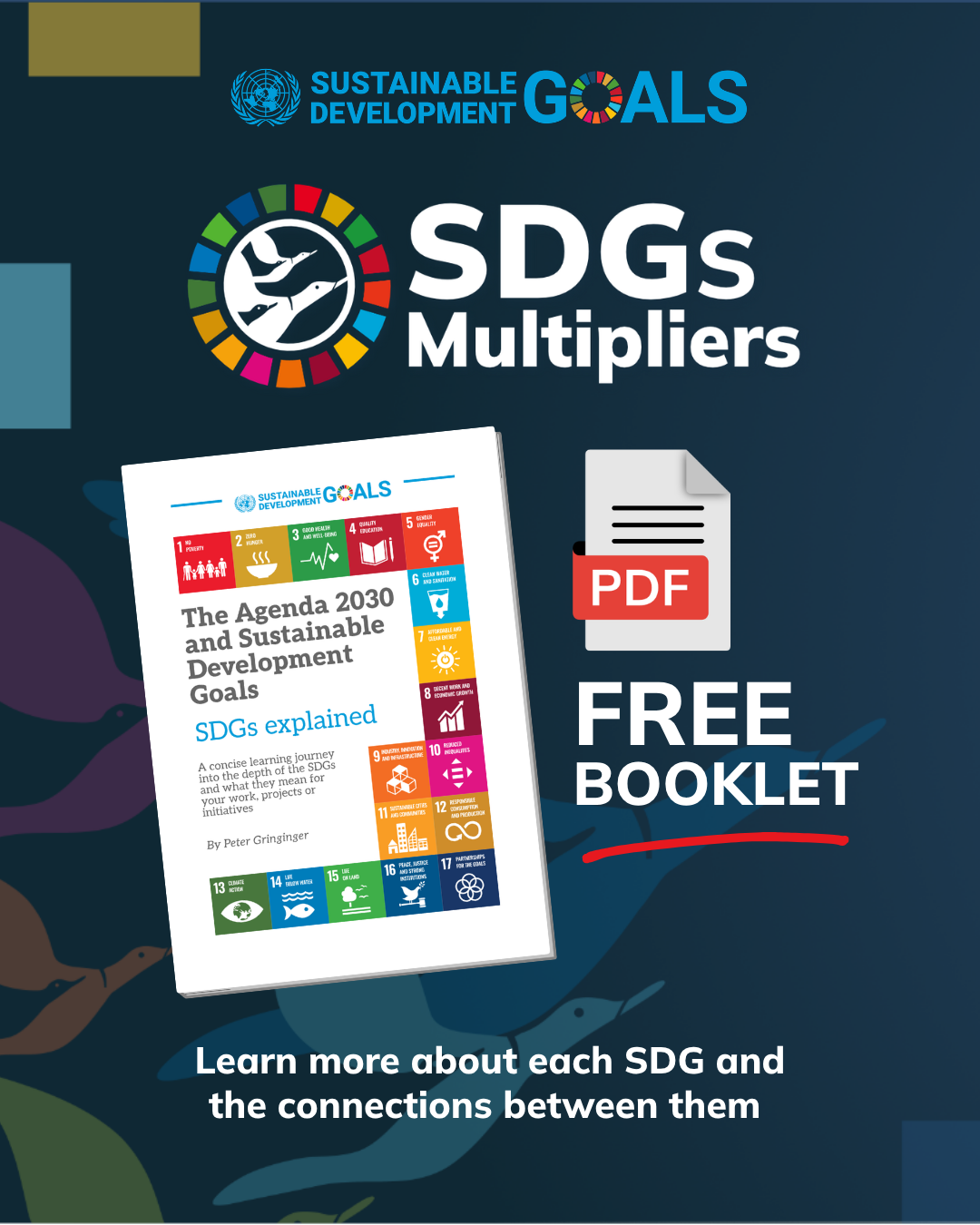
Gaia Education is delighted to offer a free downloadable booklet, written by Peter Gringinger, Gaia Education's SDG Programme Coordinator. Based on the highly successful SDGs Explained LinkedIn newsletter series, this resource provides an accessible and engaging introduction to all 17 Sustainable Development Goals, their interconnected nature, and the wider frameworks that can help us create meaningful, lasting change.
As someone who is interested in or even working professionally in the areas of sustainability and regeneration, you are likely also very familiar with 'failure' or at least not achieving what your set goals and objectives may have been in projects, initiatives, groups, organisations and the like. You probably know all too well that transformative change is challenging and demands at times more than what we can accomplish with the resources we have and the context we find ourselves working in. Real life messiness at work, which does not mean that certain change and transformation has not happened and continues to happen, but maybe not quite as intended or in the way we have planned or hoped for, and most commonly not fast enough.
If you are or have been engaged with the Agenda 2030 and the Sustainable Development Goals (SDGs) or not, or even may have turned away from them for various often understandable reasons, not least due to the reports on progress being released annually which repeat the same message over and over again, that we will not achieve the SDGs by 2030 and that we are way off track on most of the goals and targets. Furthermore, a few countries have been very critical or even dismissive of the SDGs combined with ever more dramatic and scary geopolitical developments including conflicts and their global consequences grabbing most people's (and media) attention, leaving less and less space, time and resources for positive and viable alternative/regenerative pathways.
Irrespective of all that, the reality is that the overwhelming majority of countries show strong and continuing support for and actively work on the achievement of the SDGs (with all the difficulties and limitations associated with it). But since their adoption in 2015, the Sustainable Development Goals (SDGs) have delivered results at scale, for example —expanding access to clean water, electricity, health care and digital connectivity for billions of people. In addition to that and contrary what one may think, most countries are strongly committed to multilateralism including the implementation of the SDGs, acknowledging substantial headwinds from different directions, but already working on ways forward beyond 2030,
And some groups advocate for accelerating SDG progress through 2030 and beyond could be achieved through;
(1) end ongoing wars and conflicts and redirect military expenditures toward peace and human development;
(2) establish an ambitious timeline for SDG implementation;
(3) organize implementation around six major transformations;
(4) adopt long-term investment plans to support these transformations; (5) strengthen continental, regional, and local cooperation and investment;
(6) introduce new global taxes to finance global public goods;
(7) develop global governance frameworks for AI, biotechnology, and other emerging technologies; and
(8) establish new UN campuses in Asia, Africa, and Latin America.
For sure valuable starting points for different trajectories than we are currently on and of course much more and further will be needed.
After all the SDGs are the only but global agreed upon 'guidance' on where we should head towards (not as an end point though), to achieve ecological sustainability, social justice and fair economic development for all within the planetary boundaries. This is exactly why the SDGs were always meant for whole systems based and holistic integration of all SDGs in projects, initiatives, groups and organisations at various scales, starting from the local level, in your community, your school, your university or college, your local council, your NGO, your SME etc. This is also where Gaia Education has been providing, since 2016, practical support through various tools and methods as well as training to practically work with and implement the SDGs on a local to (bio)regional level based on the Gaia Education 4 Dimensions of sustainability and regeneration. Not least is it of advantage starting to work with the SDGs as they are widely recognised and to at least to some extent included in a number of organisational work, and you can use them as an on ramp to eventually move beyond the SDGs, maybe towards something like 'Regenerative Development Goals' ?
Hence, we recommend to (re)engage with the SDGs as a set of tools, approaches and methods to engage towards Regenerative Design and Development.
Gaia Education SDG Resources
As mentioned above Gaia Education has worked with and for the SDGs since 2016 by providing various practical tools and methods for working with the Agenda 2030 and the SDGs on a local level. Starting from the UNESCO supported and endorsed SDG Flashcards and the free SDGs Multipliers Handbook as training manual to a multitude of further resources for your own training on everything SDGs to materials for conducting SDG (implementation) workshops and training in various settings and additional (some external) resources.
Check out the Gaia Education SDG TOOLKIT FOR DESIGNING COMMUNITY PROJECTS today.
Sustainable Development (Goals) Annual Reports 2026
If you work with the SDGs It's useful to understand where we are at right now and where we should be heading.
Both the United Nations and the Sustainable Development Solutions Network (SDSN) have recently released their 2026 progress reports on the SDGs. Even though overall progress has been slow and insufficient some significant strides forward have been achieved in certain regions and areas. The reports provide the latest data and statistics on the SDGs, for individual SDGs and targets, and including rankings, trends, county profiles, spillover analysis and many suggestions for ongoing and increased efforts. The reports emphasise that the SDGs remain the world’s shared blueprint for peace, prosperity and sustainability and must be urgently returned to the centre of global decision-making. They identify the priority actions needed to accelerate progress, including increased investment, strengthened international cooperation, expanded access to technology and data, a faster energy transition, greater gender equality, and renewed commitments to peace. The reports underscore that the choices made over the next four years will determine not only whether the Goals are achieved by 2030, but also the well-being of people and the planet for generations to come.
The UN Sustainable Development Goals Report 2026
SDSN Sustainable Development Report 2026

0 comments
Leave a comment