

"We're Working Harder Than Ever. So Why Does Nothing Change?"

There's a specific kind of exhaustion that doesn't come from doing too little. It comes from doing a lot — meetings, strategies, restructures, new committees, new frameworks — and still watching the same dynamics repeat. The same three people carrying everything. The same decision getting stuck at the same desk. The same community meeting where the room nods and nothing actually shifts.
If that sounds familiar, you're not bad at your job. You're working inside a structure that was never designed to evolve.
Most governance systems weren't built to grow. They were built to control.
Think about it: committees, hierarchies, five-year plans, top-down consultations — most of these were designed for stability, not for responsiveness. They're good at holding things steady. They're terrible at sensing what a community, an organisation, or a territory actually needs right now, and adapting to it.
So when the context changes — and it always does — the structure doesn't bend. People do. You add more coordination. More check-ins. More energy. The system stays the same shape, and you just push harder against it.
That's not a management problem. That's a paradigm problem.
Governance has more than one operating system
Here's something most of us were never taught: there isn't just one way to organise power. There are at least four.
Centralised governance concentrates decision-making at the top. It's efficient, until it isn't — and it tends to accumulate power in ways that quietly extract energy from everyone else in the system.
Decentralised governance spreads participation around, but often keeps the same central logic underneath. More people are consulted. The power still flows one way.
Distributed (or polycentric) governance allows multiple, real centres of decision-making to coexist and cooperate — without collapsing into one authority.
Bioregional governance goes a layer deeper. It doesn't start from a model at all. It starts from place — from the specific relationships, history, and living dynamics of a territory or community — and lets the structure emerge from there, distributing power according to what's actually needed where.
Most of us are operating somewhere between the first two without ever having chosen to. And that's the real reason things feel stuck: you can't fix a structural problem with more effort. You can only fix it by understanding — and shifting — the paradigm underneath.
This is what Regenerative Governance is built to do
Gaia Education has partnered with Resilience.Earth, a cooperative that's spent the last decade doing exactly this kind of work — not in theory, but in the field. Over ten years, their team has accompanied 250+ institutions and organisations, facilitated more than 3,300 community processes, and worked directly with over 43,000 people across agrofood systems, municipalities, cooperatives, and rural and bioregional networks. This isn't a group that studied governance. It's a group that's been quietly rebuilding it, territory by territory, for a decade.
That experience is distilled into a six-session live course, starting October 26th.
Learn more about Regenerative Governance
It's co-facilitated by two people who approach the same problem from opposite, complementary angles.
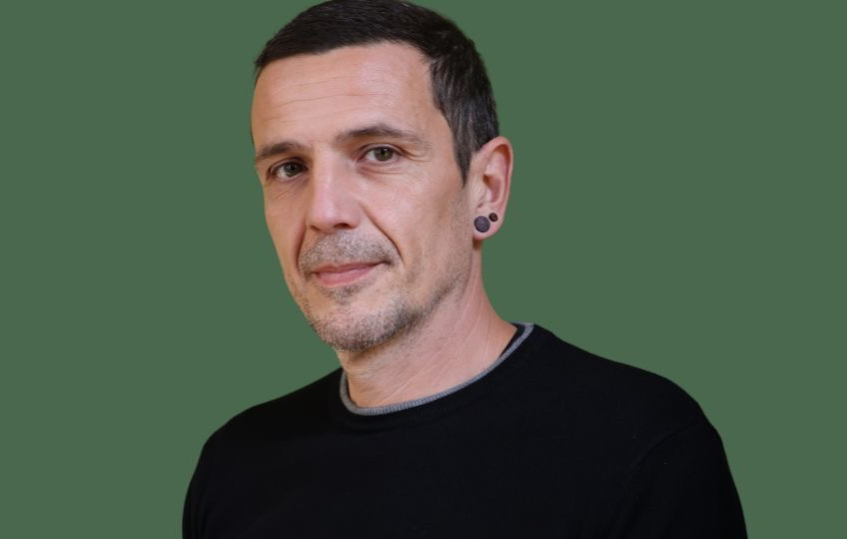
Òscar Gussinyer, co-founder of Resilience.Earth, works from the structural side — nearly thirty years spent redesigning how municipalities, rural networks, and cooperatives make decisions, so that power gets distributed instead of hoarded, and communities can hold complexity instead of flattening it into control.
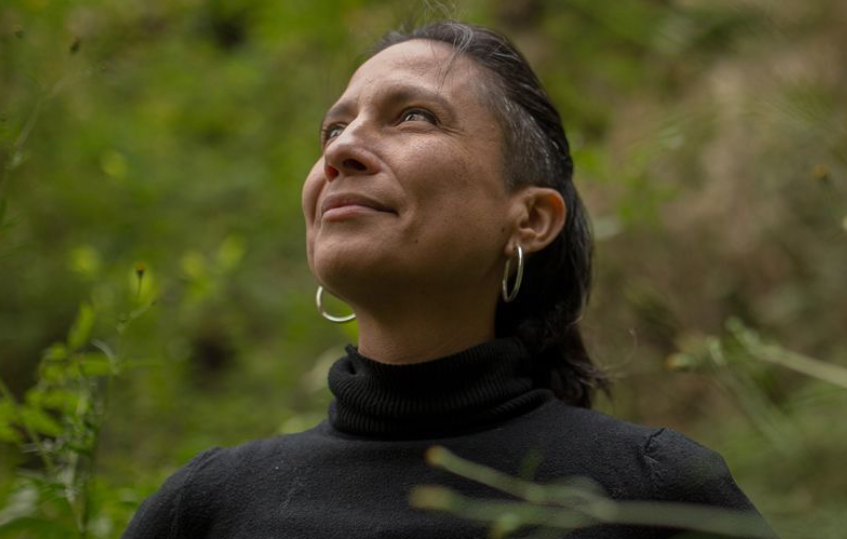
Erika Zárate, also a co-founder, works from the relational and cultural side — weaving decolonial and intersectional thinking with Quechua Indigenous knowledge systems to help communities process what's underneath the dysfunction: historical trauma, disconnection, broken trust. Because a new governance chart means nothing if the relationships inside it are still fractured.
Structure and soul.
That's the pairing this course is built on — and it's rare to find both in the same room.
What actually happens over six weeks
The Regenerative Governance course walks through the real, practical arc of how governance evolves — not as an abstract theory, but as a sequence you can apply directly to your own organisation, community, or territory:
You'll start by learning to read the paradigm you're actually operating in — not the one on paper. Then you'll move into diagnosis as collective storytelling rather than data extraction (because the people closest to a problem usually already know what's wrong — they're just not being asked). From there: mapping the real flows of power, trust and resources in your system; planning from long-term vitality instead of short-term output; coordinating through complementarity instead of command; and finally, integrating it all into one concrete shift you can start making immediately.
Every session pairs a real case study — from an agroecological cooperative supermarket to a post-conflict water governance process — with live facilitation, breakout reflection, and tools you can take home the same week.
By the end, you won't walk away with a new theory to file away. You'll walk away with one clear, catalytic shift you can start making in the structure you're already responsible for.
Who this is actually for
If you manage a team, sit on a municipal council, coordinate a cooperative, facilitate a community initiative, hold a public role, or lead any kind of collective process — and you've felt that particular fatigue of pushing hard against a structure that won't move — this course was built with you in mind. You don't need a background in systems theory. You need the willingness to look honestly at where your structure is stuck, and the appetite to do something about it.
The details
- Starts: October 26th, 2026
- Format: 6 live sessions (2 hours each), Thursdays at 5PM UTC, plus flexible async material (around 10 hours a week total)
- Price: £200 (low income) / £250 (regular) / £300 (abundant) — pay what reflects your reality
- Language: Delivered in English, with course materials also available in Spanish and subtitled recordings
Live sessions aren't mandatory, and everything is recorded. But if you can make it live, that's where the real work happens.
The structure you're inside didn't design itself, and it won't redesign itself either. But it can evolve, and this course is where that starts!

2 comments
This is a thought-provoking perspective on why working harder does not always lead to meaningful change. I especially appreciate the distinction between changing processes and changing the underlying structures that shape how decisions and power flow. The focus on regenerative and place-based governance offers a valuable way to think about building more adaptive and resilient communities. Telkom University
Why, oh, why does this read like AI?
:(
Leave a comment