

What Is a Training of Trainers — and Why Facilitation Is the Skill Sustainability Needs
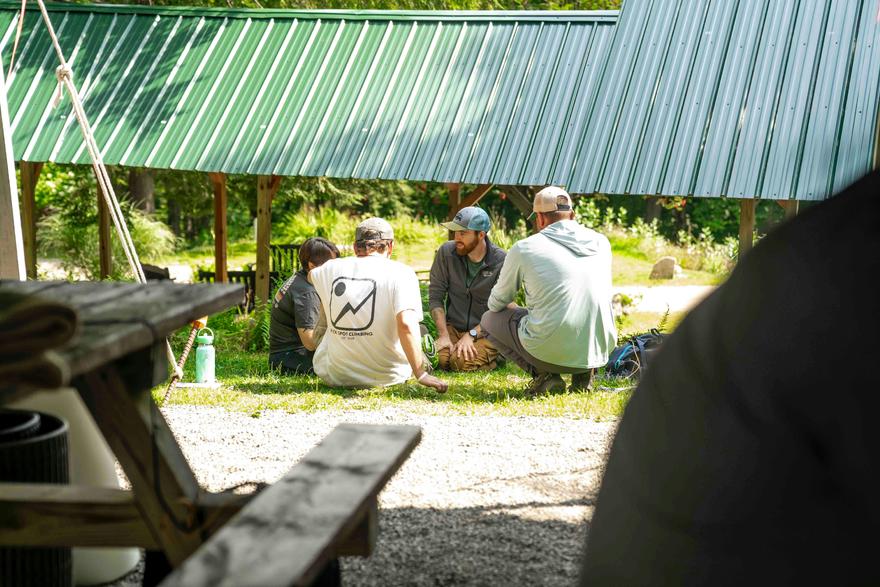
Photo by Frederick Shaw on Unsplash
Most of us have sat through a presentation by someone who clearly knew their subject inside out, and felt absolutely nothing shift. And most of us have been in a room with a good facilitator and watched a group surprise itself — arrive somewhere none of them could have reached alone. The difference between those two rooms is not knowledge. It's facilitation. And facilitation, it turns out, is a craft you can learn.
That craft is what a Training of Trainers teaches. If you care about sustainability, regeneration, or change of any kind, it may be the most useful week you spend this year, because facilitation is the quiet bottleneck on all of it.
Why Knowing Is Not Enough
The world does not lack good ideas about sustainability. The reports exist. The frameworks exist. What's often missing is the human capacity to bring people together around those ideas and help them act — to run a meeting that doesn't collapse into the loudest voice, to hold a community through disagreement, to design a session people leave changed by rather than merely informed by.
That capacity is facilitation, and it's different from expertise. An expert transmits what they know. A facilitator creates the conditions in which a group discovers what it knows together. Both matter. But when it comes to change that lasts, the second is usually the one in short supply.
The Three Pillars
Gaia Education's Training of Trainers is built around three pillars, each one a distinct skill.
Facilitating participatory learning journeys. This is the foundation: how to design and hold an experience where people learn by doing, not by listening. It means understanding learning cycles, reading group dynamics, and making the small craft decisions — when to speak, when to wait, when to break a group into pairs — that decide whether a session opens people up or shuts them down. The goal isn't a good lecture. It's a living learning community.
Deepening the edge work. This is the subtle one. The most alive learning tends to happen at the edge — the moment a group leaves the familiar and doesn't yet have the answer. It's uncomfortable, and most facilitation, meaning well, rushes to relieve the discomfort with a tidy exercise or a quick answer. Learning to stay at that edge on purpose, holding a group in productive uncertainty without letting it tip into anxiety, is one of the most valuable things a facilitator can do. It asks something of you, not just your technique — you have to be steady at the edge yourself first.
The most alive learning happens at the edge, where the familiar runs out and the new has not yet arrived.
Translating the SDGs into local action. The UN's Sustainable Development Goals are global agreements, written in the language of conventions and targets. On their own, they don't change a street or a school. This pillar is about decoding them — taking something vast and abstract and helping a real community find what it can actually do, with what it has, where it is. Global frameworks made local and concrete.
Seeing Across Four Dimensions
Running through all three pillars is Gaia Education's way of holding sustainability whole, across four dimensions: social, ecological, economic, and worldview. A common mistake is to reach only for the dimension we already know — the ecologist who forgets the economics, the organiser who forgets the inner, cultural shift. A good trainer learns to hold all four at once, and to help a group do the same. Part of a ToT is practising exactly that range.
Who It's For
A Training of Trainers suits educators and facilitators, community leaders and organisers, people working in NGOs or local government, and anyone drawn to teaching participatory methods and helping communities move on sustainability. You don't need a wall of qualifications. You need some experience with groups, or a real pull toward it, and a willingness to learn by doing rather than by watching.
It's also a recognised step on the path toward becoming a certified Gaia Education trainer, with manuals, a certificate, and a place on our Certificated Trainers' Roster waiting on the other side.
If this is the skill you've been circling, our next Training of Trainers runs this September, residential, inside the Damanhur community in Italy. We move slowly, practise together, and you facilitate for real before the week is out.

1 comment
I couldn't resonate more with this. It's always a delight to discover deeply resonant regenerative work that I haven't known about previously, even as I'm a decade into regenerative practice myself. I am actually spending September learning the facilitation skills of Warm Data with Nora Bateson in Oregon, but I would be very interested to join you all in the future in Damanhur for an immersion. My main question is whether these trainings are viable for people with small children? I would need to bring my husband and young child.
Leave a comment