

Building an Ecovillage From the Ground Up
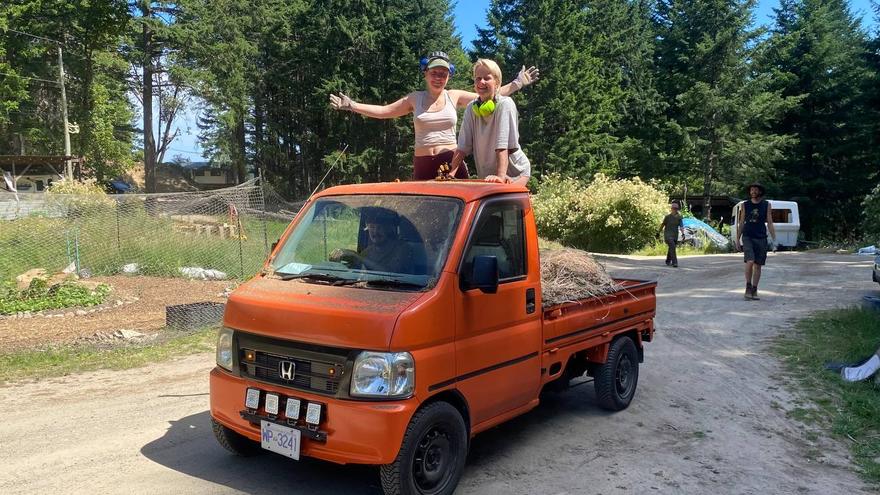
Written by Chris Taylor, mini-Ecovillage Design Education Canada programme organiser.
Part of what appealed to me about getting involved with Entelechy Ecovillage is creating systems by which a community can become more economically self-sufficient. In a lot of situations, residents of ecovillages work remotely, or work elsewhere, and get a wage or salary that they utilize at home.
I was interested in creating systems by which people in communities can work together to build revenue-generating models that fund their lives back on the community. Working from the land they live on frees up time from commutes and, ideally, makes life more sustainable and pleasurable, working alongside friends and neighbours.
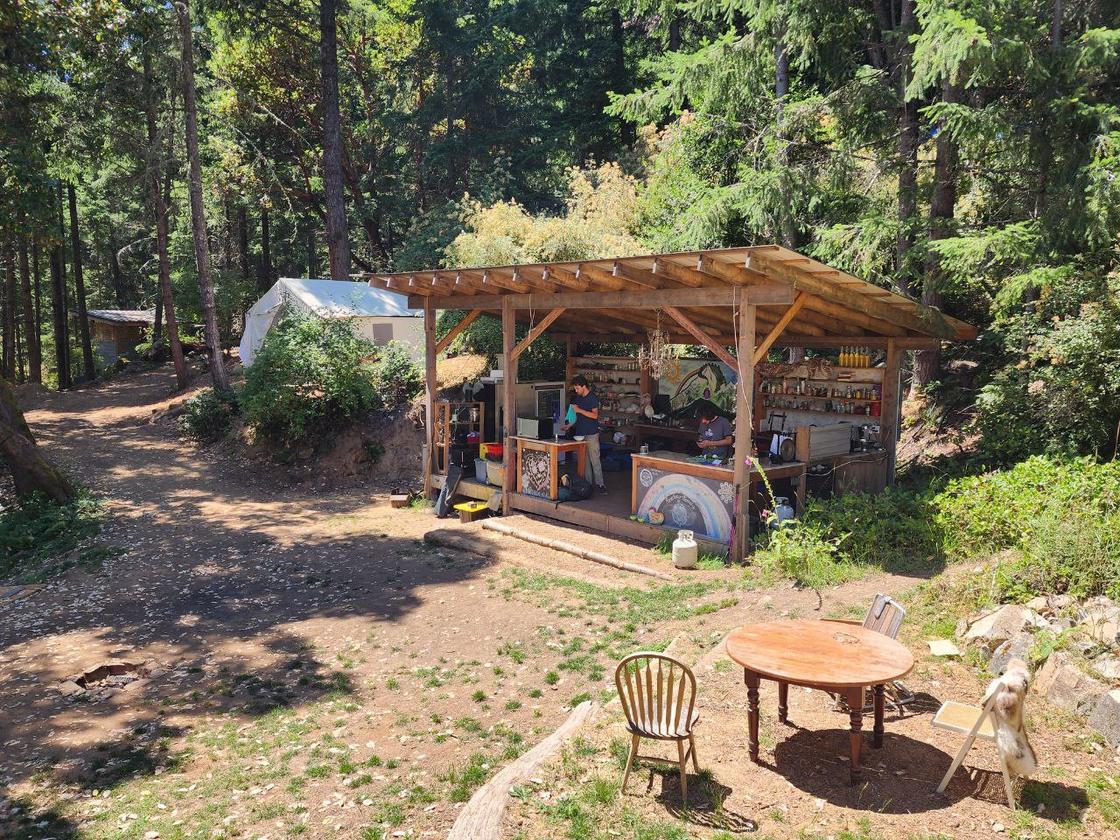
Our outdoor kitchen and common hangout area
I was doing a web3 residency in Japan when I heard about the EDE offered at Alaya Ecolodge in Bali. I was interested in sharing our ecovillage as a model for others who might want to do the same, and when I researched strategies for this, Gaia Education kept coming up.
Offering an EDE to share knowledge on how to build more sustainable systems of living, ecovillages, staffed by people of our land through their direct experience building this one, seemed like the perfect fusion of strategies I had been ideating.
So I joined the four-week EDE at Alaya and learned a lot about their experience. The founders had been residents for a long time at Auroville, and they brought that depth with them. I learned about the local situation in Bali and in Indonesia more broadly. I learned a lot, had a great time, and met some great friends. But when I thought about our North American context, I realized four weeks would be a big ask for who I imagined most of our students to be. That is a long break to take from work, along with significant cost and commitment for people from our region.
Enter the mini-EDE. The one-week version of the EDE, where we essentially cover one of the four dimensions each day, worldview, social, economic, ecological, seemed better tailored to our cultural context. The student I picture is often in a transitional period, figuring out how to leave the system; and embark on a new way of life. But they are still in the midst of commitments and bills and everything else. A one-week practical hands-on course felt more manageable for most people in that situation.
And I believe we can give people a good start. So this August, we are running our first mini- EDE at Entelechy. Seven days, the four dimensions, taught by people who live here and are building this place in real time. Worldview one day, social the next, then economic, then ecological, followed by a group project of co-creating your own ecovillage design. The units will not be taught abstractly, but illustrated by the actual work going on around us: the gardens, the structures, the decisions we are still figuring out as a community.
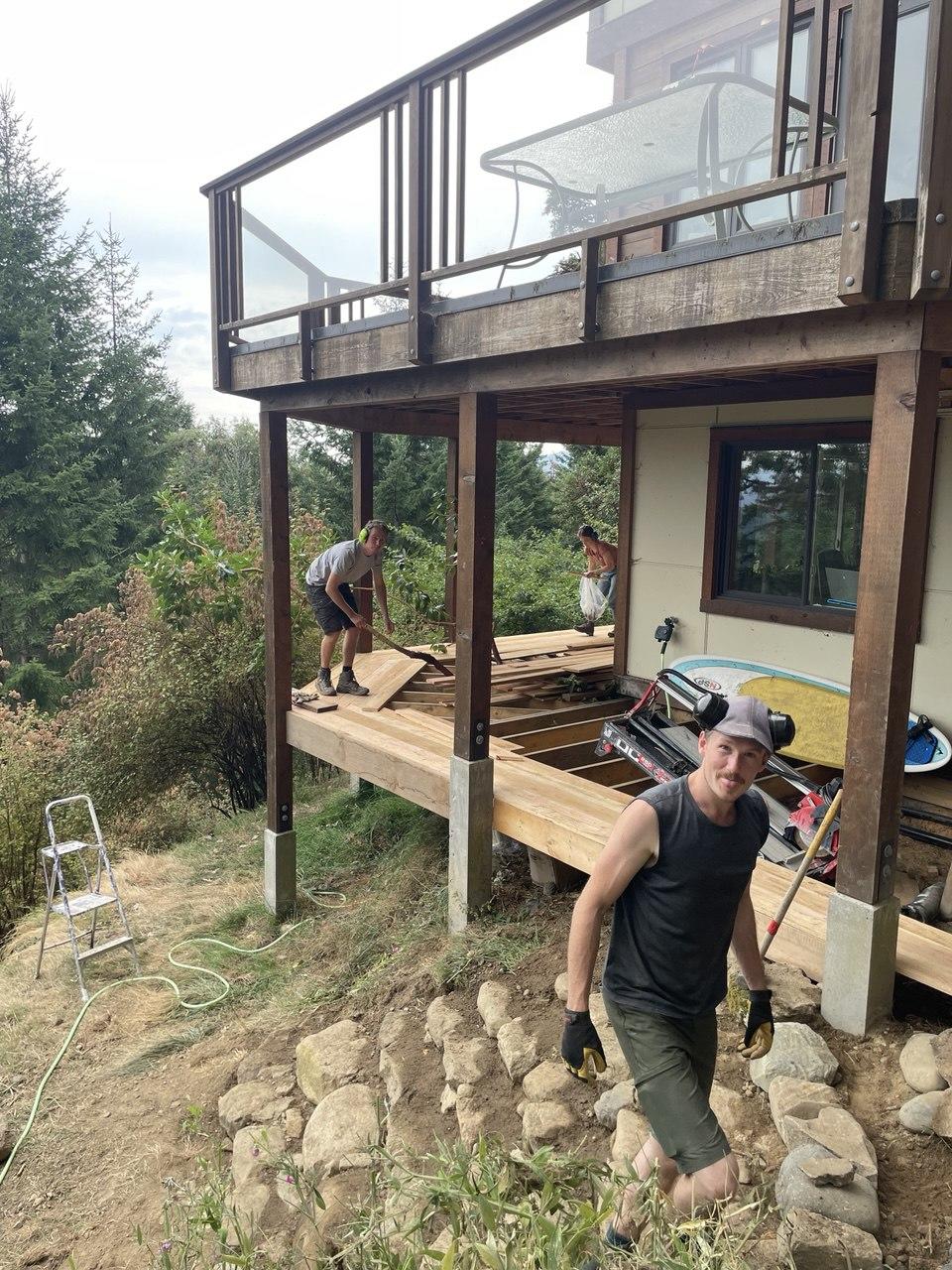
Adding a second deck to our forest house
I keep coming back to that economic question I started with. A lot of people are fed up or wanting to disengage with thinking about money. It is easy to get excited about growing food and building with natural materials. It is harder to answer how a community pays for itself, or even grow. And how do we create a sense of community without everyone disappearing into remote jobs that pull their attention back out of the place they are trying to build? I think this question handled delicately and with attention, is one of the most interesting problems to tackle, in this journey.
What does it take, in this particular bioregion, to source land that can feed you? To gather the materials to build? To create a community resilient enough to last? We did it here, and our resources were far from unlimited. That is exactly why I think we can help point the way for others. Not because we have all the answers, but because we are close enough to the beginning to remember what it actually takes to start. If that is the kind of thing you are trying to figure out for yourself, I would love to have you join us.
In community,
Chris Taylor

0 comments
Leave a comment